
The year 2026 marks a historic turning point for women’s health in India. On February 28, 2026, Prime Minister Narendra Modi officially launched the nationwide Human Papillomavirus (HPV) vaccination drive from Ajmer, Rajasthan. This is not just another medical campaign; it is a shield for the next generation.
If you are a girl aged 14, or a parent of one, this is the most important health update you will read this year. Below is a deep dive into what this drive means, why the HMPV (Human Papillomavirus) vaccine is essential, and how you can access it for free.
What is the India HPV Vaccination Drive 2026?
The government has integrated the HPV vaccine into the National Immunization Programme to eliminate cervical cancer a disease that currently claims nearly 80,000 lives in India every year.
The Goal: To vaccinate approximately 1.15 crore girls aged 14 across all States and Union Territories.
Who is Eligible?
Currently, the free government drive specifically targets:
- Girls aged 14 years: This is the primary cohort for 2026.
- The 90-Day Grace: Girls who turn 15 within 90 days of the February 28 launch are also eligible under the intensive campaign.
- Catch-up window: While the campaign is intensive for the first three months, the vaccine will eventually be part of routine immunization at government health centers.
Why the HMPV Vaccine is a Game-Changer
You might hear people refer to the virus as HMPV or HPV. In the context of cervical cancer, we are talking about the Human Papillomavirus. This virus is incredibly common and is responsible for almost all cases of cervical cancer.
The Single-Dose Strategy
In a major policy shift for 2026, India has adopted a single-dose regimen for the 14-year-old cohort.
Expert Insight: Following World Health Organization (WHO) guidelines, data shows that one dose provides strong, long-lasting protection for young girls, similar to the older two-dose schedule. This allows the government to cover more people quickly.
Which vaccine is being used?
While India’s indigenous vaccine, Cervavac, is available in the private market, the government drive is currently using Gardasil-4 (a quadrivalent vaccine). It protects against four types of HPV:
- Types 16 & 18: The high-risk types responsible for 80% of cervical cancer in India.
- Types 6 & 11: The types that cause genital warts.
Understanding the Enemy: Sign Symptoms of Cervical Cancer
One of the biggest challenges in India is that cervical cancer is often silent in its early stages. Many women ignore the warning signs, thinking they are just “period issues” or related to age.
If you are an older teenager or a woman reading this, watch out for these sign symptoms of cervical cancer:
- Abnormal Bleeding: Bleeding between periods, after intercourse, or after menopause is a major red flag.
- Unusual Discharge: Watery, bloody, or foul-smelling vaginal discharge.
- Pelvic Pain: Persistent pain in the lower back or pelvic region that isn’t linked to your period.
- Pain During Intercourse: Also known as dyspareunia, this can be a sign of changes in cervical tissue.
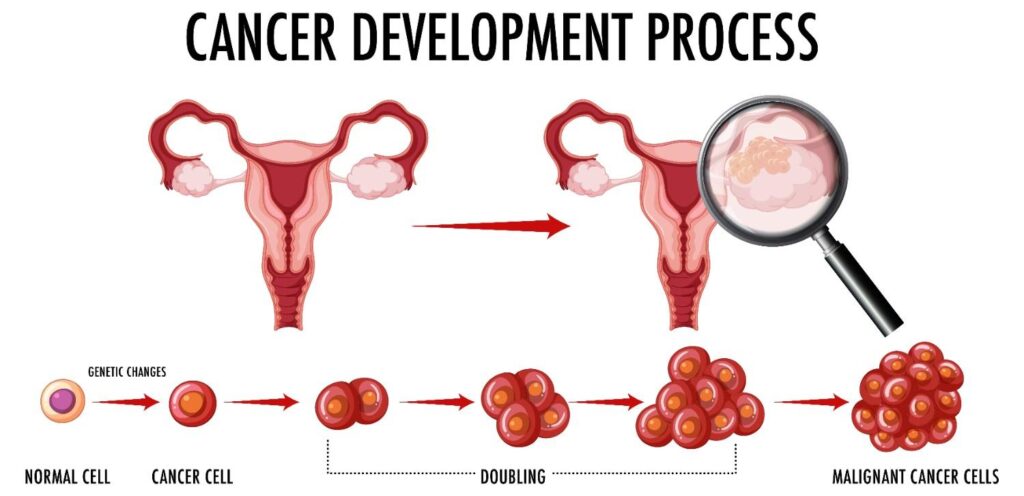
Real-World Scenario: A 35-year-old woman in Delhi might dismiss slight spotting between her cycles as stress-related.
However, if that spotting is caused by a persistent HPV infection from her younger years, early screening could save her life. The vaccine given at age 14 prevents this scenario from ever happening.
How to Get the Vaccine: Step-by-Step
The government has made the process as simple as the COVID-19 vaccination.
- Locate a Center: Vaccines are available at Ayushman Arogya Mandirs (Primary Health Centres), Community Health Centres, and District Hospitals.
- Digital Tracking: The drive uses the U-WIN portal (similar to CoWIN). You can register and track your vaccination digital certificate there.
- Cost: It is 100% free in government facilities. In private hospitals, the same vaccine (or Cervavac) can cost between ₹1,400 to ₹4,000 per dose.
Common Myths vs. Facts
| Myth | Fact |
| The vaccine causes infertility. | False. Extensive global studies show no link between the vaccine and fertility. |
| You only need it if you are sexually active. | False. It is most effective before any exposure to the virus, which is why age 14 is the sweet spot. |
| One dose is not enough. | False. In 2026, the WHO and India’s NTAGI confirmed that a single dose provides excellent protection for girls under 15. |
Actionable Takeaways for Parents
- Check the Date: If your daughter was born in 2011 or 2012, she is likely in the current eligibility bracket.
- Don’t Delay: The intensive 90-day daily drive ensures maximum availability and shorter queues.
- Talk to Her: Explain that this is a cancer prevention shot. Normalizing the conversation around reproductive health removes the stigma.
Cervical cancer is the only cancer we can almost entirely eliminate with a simple vaccine. India is taking a giant leap in 2026 make sure you and your family are part of it.