
Walk into any Indian supermarket, and you are greeted by a wall of golden liquids. Sunflower, soybean, mustard, rice bran, olive, groundnut the options are endless. If you’ve ever stood there confused, wondering which bottle will actually protect your family’s heart health, you are not alone.
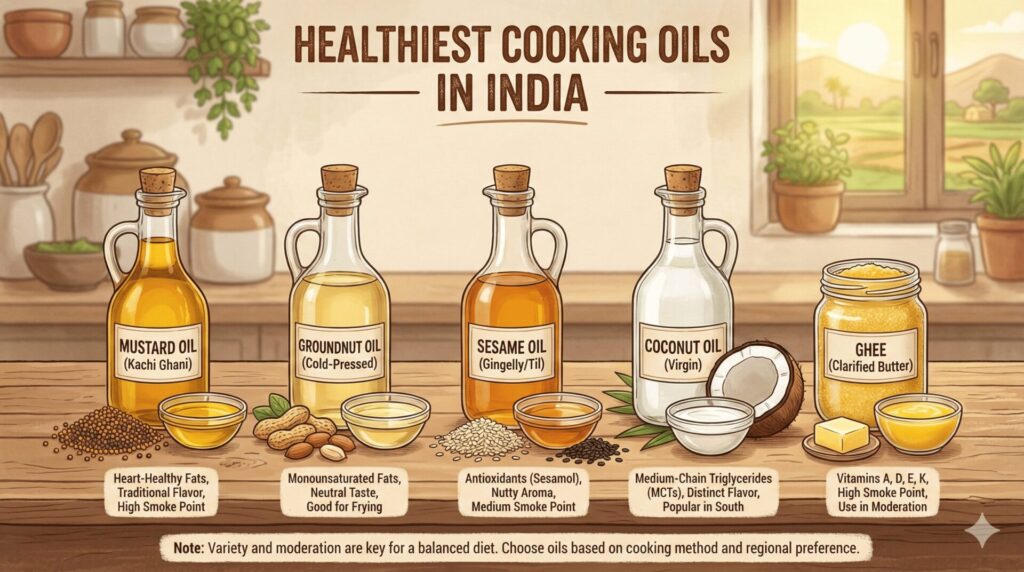
Choosing the healthiest cooking oil in India isn’t just about picking the one with the best TV commercial. It’s about understanding smoke points, processing methods, and how different oils react to our unique style of cooking from high-heat tadkas to deep-fried puris.
This guide cuts through the marketing fluff to give you science-backed, practical advice on selecting the best oil for your Indian kitchen.
Why One Best Oil Doesn’t Exist
Before we crown a winner, we need to bust a myth: there is no single “magic oil” that does it all. Indian cooking is diverse. The oil that makes a perfect salad dressing (like Extra Virgin Olive Oil) will turn toxic and bitter if you try to use it for deep-frying samosas.
According to the ICMR (Indian Council of Medical Research) and the National Institute of Nutrition (NIN), the golden rule is rotation. No single oil contains all the essential fatty acids in the right proportions. By rotating your oils, you ensure your body gets a balance of MUFA (Monounsaturated Fatty Acids), PUFA (Polyunsaturated Fatty Acids), and Omega-3s.
The Top Contenders: Best Cooking Oils for Indian Homes
Let’s break down the best options based on health benefits, smoke point, and traditional wisdom.
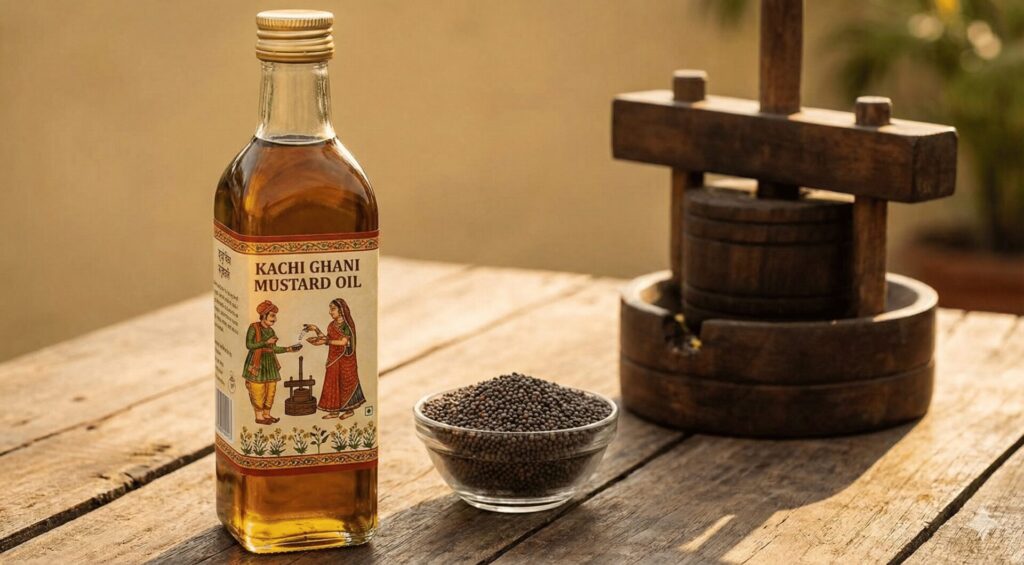
1. Kachi Ghani Mustard Oil
For centuries, Kachi Ghani mustard oil has been the backbone of North and East Indian kitchens. Unlike refined oils, cold-pressed mustard oil retains its natural antioxidants and essential oils.
- Why it wins: It has an excellent ratio of Omega-3 to Omega-6 fatty acids, which is crucial for reducing inflammation and cholesterol levels.
- Best for: Curries, stir-fries, and marination.
- The Smoke Point Factor: It has a high smoke point (around 250°C), making it incredibly stable for deep frying.
- Pro Tip: Always let the oil heat up to the smoking point to burn off the raw pungency before adding spices.
2. Cow Ghee
Grandma was right Desi Ghee is good for you. After being villainized for decades, ghee has made a massive comeback globally. It is good for best Nutrition for Growing Kids
- Why it wins: Ghee is rich in fat-soluble vitamins (A, D, E, K) and Butyric acid, which aids gut health. Unlike vegetable oils, it doesn’t oxidize easily into harmful free radicals when heated.
- Best for: Tadkas (tempering), sweets, and drizzling over rotis.
- Caution: While healthy, it is high in saturated fats. Moderation is key.
3. Rice Bran Oil
If the strong smell of mustard or coconut oil isn’t for you, Rice Bran oil is a fantastic alternative. Extracted from the outer layer of rice grains, it is gaining popularity for its neutral taste.
- Why it wins: It contains Oryzanol, a powerful antioxidant known to improve cholesterol profiles. It naturally has a balanced mix of MUFA and PUFA.
- Best for: Everyday cooking, deep frying, and baking where you don’t want the oil to overpower the dish.
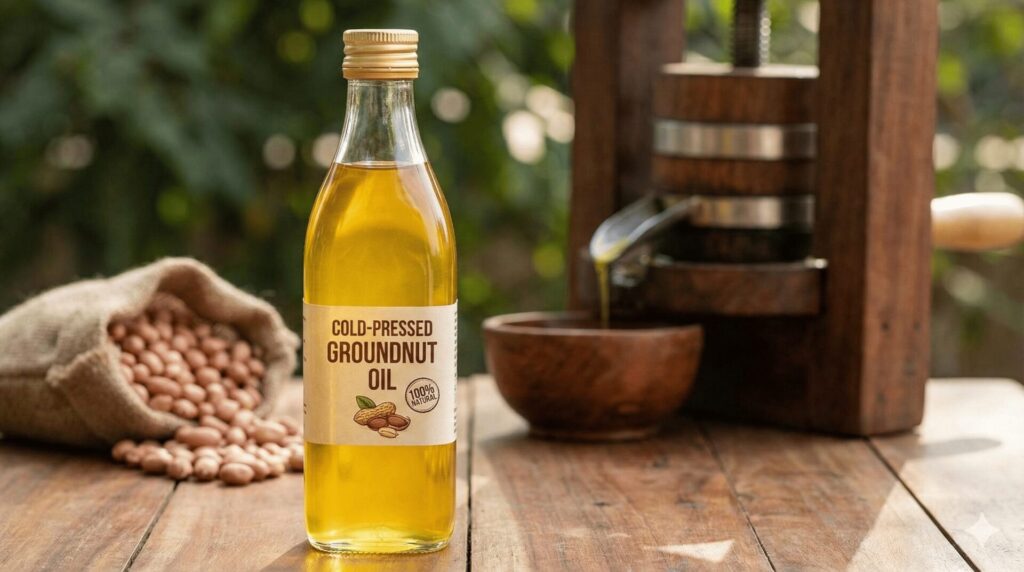
4. Cold-Pressed Groundnut Oil
A staple in Western and Southern India, filtered or cold-pressed groundnut oil is delicious and heart-healthy.
- Why it wins: It is high in Resveratrol (good for the heart) and Vitamin E. Its nutty aroma enhances the flavour of veggies and snacks.
- Best for: Deep frying and sautéing. It has a high smoke point and doesn’t absorb too much into the food.
5. Coconut Oil
In Kerala and parts of Tamil Nadu, coconut oil is non-negotiable.
- Why it wins: It contains Medium Chain Triglycerides (MCTs), which the body uses for quick energy rather than storing as fat. It also has lauric acid, which boosts immunity.
- Best for: Traditional South Indian curries and shallow frying.
- Note: Use virgin or wood-pressed versions rather than refined coconut oil for maximum benefits.
The Refined vs. Cold-Pressed Debate
This is where many consumers get tricked.
- Refined Oils: These are treated with chemicals and high heat to make them odourless and colourless. This process strips away natural nutrients and can introduce harmful trans fats.
- Cold-Pressed (Wood Pressed/Ghani) Oils: These are extracted by crushing seeds at low temperatures. They retain their natural nutrients, flavour, and aroma.
Verdict: Whenever possible, choose filtered or cold-pressed oils. They might cost a bit more and look cloudy, but they are infinitely better for your heart and gut health.
Is Olive Oil Good for Indian Cooking?
You’ve probably heard that Olive oil is the healthiest oil on the planet. While true for Mediterranean diets, it’s tricky for Indian food.
- Extra Virgin Olive Oil (EVOO): Has a very low smoke point. Do not use this for frying or high-heat tadkas. It will burn and lose its health benefits. Use it for salads or light sautéing.
- Pomace or “Pure” Olive Oil: chemically processed to withstand heat. It’s okay for Indian cooking, but honestly? You are better off using high-quality local oils like Groundnut or Mustard which are fresher and cheaper.
Comparison Table: Which Oil Should You Use?
| Oil Type | Smoke Point | Best Used For | Flavour Profile |
| Mustard Oil (Kachi Ghani) | High (250°C) | Curries, Frying | Pungent, Spicy |
| Ghee | High (250°C) | Tadka, Rotis, Sweets | Rich, Buttery |
| Rice Bran Oil | High (232°C) | Everyday Cooking | Neutral |
| Groundnut Oil | High (232°C) | Frying, Sautéing | Nutty |
| Virgin Coconut Oil | Medium (177°C) | Curries, Shallow Fry | Sweet, Coconutty |
| Extra Virgin Olive Oil | Low (160°C) | Salads, Drizzling | Fruity, Bitter |
Practical Tips for a Heart-Healthy Kitchen
- Don’t Reuse Frying Oil: Reheating oil creates Total Polar Compounds (TPC), which are toxic and increase the risk of hypertension and atherosclerosis. If you deep fry, use a small amount of oil and discard it afterward (or use it up quickly for a curry, but never reheat it for frying again).
- Buy Small Packs: Oils oxidize and turn rancid over time. It is better to buy 1-liter packs more often than a 5-liter can that sits open for months.
- The Blended” Trap: Be careful with “blended vegetable oils” unless they are from a reputable brand explicitly stating the ratio. Often, cheap palm oil is mixed in to lower costs.
- Store Correctly: Keep your oils in a cool, dark place. Sunlight destroys antioxidants.
Conclusion
So, what is the healthiest cooking oil in India? The answer lies in diversity.
For the best health outcomes, stop looking for one miracle bottle. Keep Mustard oil or Groundnut oil as your daily driver for curries. Keep a jar of Ghee for tempering and flavour. Use Rice Bran oil when you need a neutral touch, and keep Olive oil strictly for your salads and pastas.