
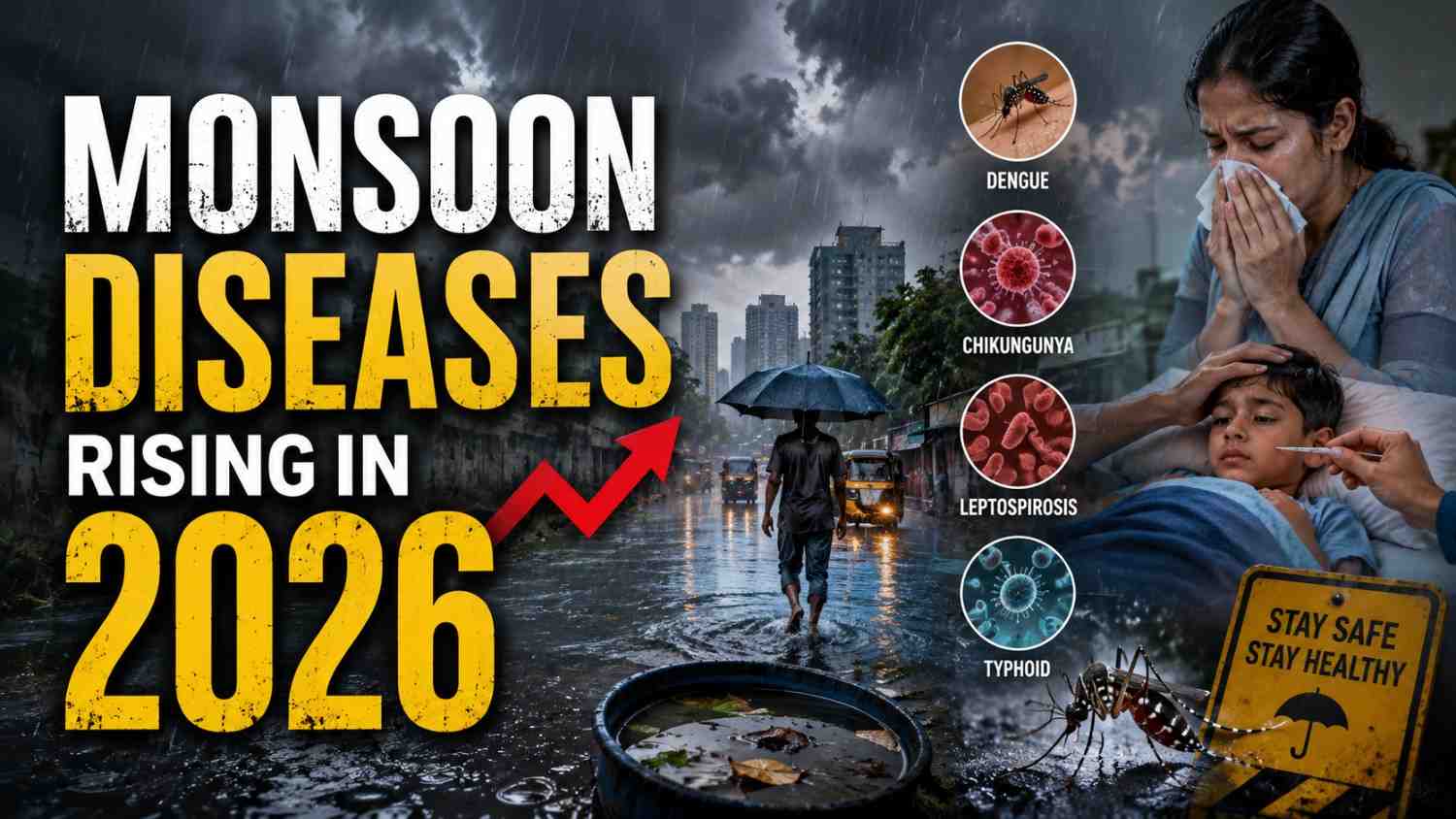
I still remember that phone call clearly. It was in July, the kind of evening when the rain hadn’t stopped for three days and high risk to spread Rainy season Diseases.
My cousin called, voice tight. Her daughter – seven years old, full of energy just a week before had a fever for two days. It’s probably nothing, she kept saying. I could hear her trying to believe it.
It wasn’t nothing. Day four, dengue was confirmed. Platelet count dangerously low. Five days in the hospital.
That’s what made me serious about writing this. Not just as a health writer but as someone who has watched too many families go through something that was, in most cases, entirely preventable.
So let me talk honestly about what actually happens during monsoon season. What diseases you should genuinely worry about. What the real warning signs look like. And what you can do starting today.
Why Rainy Season Diseases Spike Every Single Monsoon
Look, this isn’t new information. But year after year, people are still caught off guard. So let me lay it out plainly.
When monsoon hits, a lot changes at once. Stagnant water forms everywhere inside coolers, in flower pots, in gutters, in that old tire nobody’s moved in six months.
Mosquitoes don’t need much. A bottle cap of still water is enough to breed hundreds of them within three or four days.
At the same time, heavy rainfall puts pressure on water supply lines. Cracks form. Sewage seeps in. Even in cities with clean tap water, contamination spikes during flooding.
And the heat combined with moisture? That’s basically paradise for bacteria and viruses. They multiply far faster than in the dry months.
Add to that the fact that street food which many of us eat daily becomes genuinely risky. Wet air, flies, and food left out in open containers create conditions where typhoid and food poisoning can spread within hours.
Children, elderly people, pregnant women, and anyone with a compromised immune system pay the heaviest price. Their bodies just don’t have the same fighting capacity as a healthy adult.
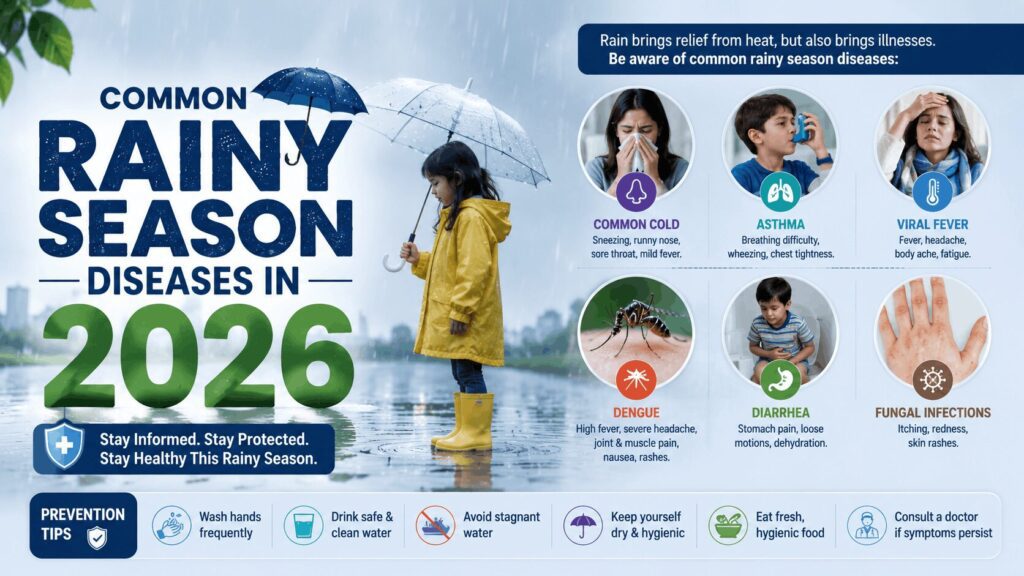
Most Common Rainy Season Diseases in 2026
Dengue Fever
I’ve written about dengue more times than I can count and every monsoon it remains one of the most dangerous infections across South Asia.
The mosquito responsible, Aedes aegypti, is a daytime biter. It doesn’t care about your mosquito net at night.
It breeds in clean, standing water right inside your home coolers, bathroom buckets, the saucer under your potted plant.
What makes dengue tricky is that early symptoms look like a bad flu. High fever — usually 103 to 104°F — with a headache so severe that regular painkillers barely help.
There’s often pain behind the eyes, which is actually quite specific to dengue and worth noting. Joint and muscle pain can be intense (dengue was once called breakbone fever— once you’ve felt it, you understand why). A rash typically appears around day 3 to 5.
If you notice fever that suddenly drops but the person gets worse — pale, confused, weak — or if there’s bleeding from gums or black-coloured stools, go to a hospital immediately. That’s severe dengue and it doesn’t wait.
Malaria
Here’s something people don’t realise: malaria is nowhere close to gone. It’s still very present across India, Africa, and much of Southeast Asia — and monsoon is peak season.
The Anopheles mosquito, which carries the Plasmodium parasite, bites mostly at night — opposite to the dengue mosquito.
Rural areas near forests or rivers, and low-income settlements with poor drainage, see the most cases. The classic malaria pattern is chills, followed by high fever, then heavy sweating, then temporary relief repeating every 48 to 72 hours.
Add severe headache, muscle pain, and fatigue that’s genuinely disabling. If you’ve been in a high-risk area and notice a fever that cycles like this, get a blood test. Don’t guess.
Typhoid Fever
Typhoid travels through contaminated food and water — and during monsoon, contamination in supply lines spikes sharply.
I’ve spoken to health officers in flood-prone districts who told me typhoid cases sometimes triple in the weeks right after heavy flooding.
People assume filtered water is always safe enough. Often it isn’t after a flood event.
Symptoms build slowly a low-grade fever that climbs over several days, weakness, belly discomfort, and loss of appetite.
Constipation or diarrhea can both occur. The really frustrating part? The incubation period is 1 to 3 weeks, so by the time you feel sick, you’ve usually forgotten what you ate or drank that caused it.
Viral Fever
Viral fever is the one that catches people off guard because it starts feeling like just a cold. But during monsoon, viral infections tend to be more aggressive and last longer.
They spread through sneezing, coughing, and touching shared surfaces — fast enough that one sick person in a household or office can infect several others within days.
Symptoms: fever, body aches, sore throat, blocked nose, cough, and a fatigue that feels heavier than normal.
Most cases resolve in 5 to 7 days with rest and fluids. But if fever crosses 103°F or lingers beyond a week, see a doctor rather than taking another round of over-the-counter medicine.
Cholera
Cholera doesn’t get discussed enough, but in flood-affected areas it’s a serious threat. Caused by Vibrio cholerae, it spreads almost entirely through contaminated water and food.
The defining sign is sudden, severe watery diarrhea — rapid fluid loss that can make a person dangerously dehydrated within hours.
Vomiting and muscle cramps follow. Start oral rehydration salts (ORS) immediately and get to a hospital. This one doesn’t wait.
Leptospirosis
Most people have never heard of this one. I hadn’t either, until I interviewed a flood relief volunteer who spent two days wading through waist-deep floodwater with open cuts on his legs — no protective gear.
A week later he was hospitalised with high fever, severe calf muscle pain, and yellowing eyes. Leptospirosis.
It’s caused by bacteria found in the urine of infected animals — rats, mostly — that mixes with floodwater and enters the body through broken skin.
Symptoms include sudden high fever, bad headache, muscle pain especially in the calves, red or yellow eyes, and chills.
In serious cases it damages the kidneys, liver, and brain. Cover every cut before going near floodwater. It sounds obvious. People forget.
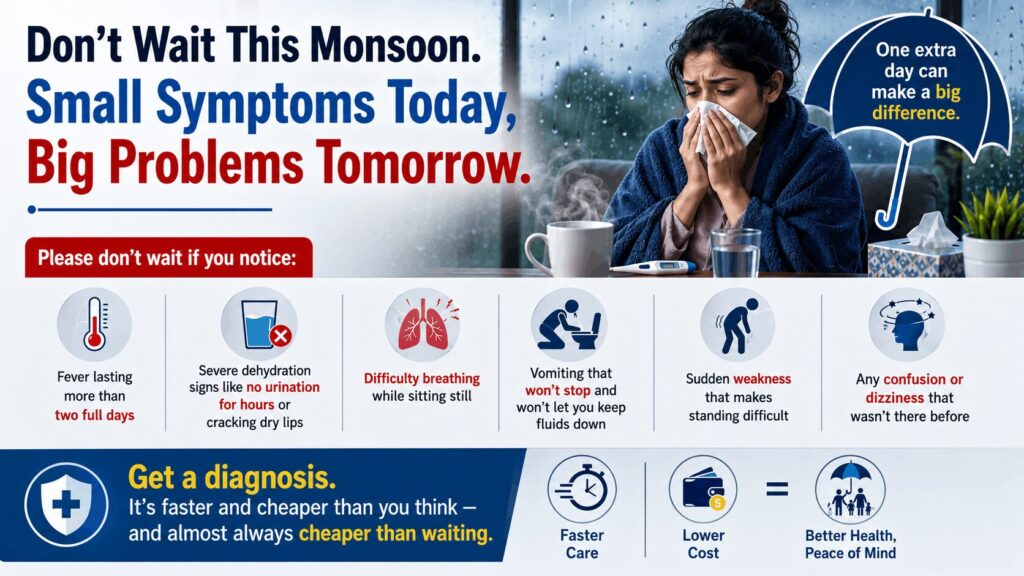
Early Signs You Should Never Ignore
Most monsoon illnesses start mild. People hold out. They try home remedies. They wait one more day. Sometimes that extra day is what makes things complicated.
Please don’t wait if you notice, fever lasting more than two full days, severe dehydration signs like no urination for hours or cracking dry lips, difficulty breathing while sitting still, vomiting that won’t stop and won’t let you keep fluids down.
Sudden weakness that makes standing difficult, or any confusion or dizziness that wasn’t there before. Get a diagnosis. It’s faster and cheaper than you think — and almost always cheaper than waiting.
Who Gets Hardest Hit
Children — their immune systems are still learning, they touch everything, and they dehydrate faster than adults.
People over 60 — slower immune response, plus most have at least one condition like diabetes or hypertension that makes any infection harder to fight.
Pregnant women — malaria and typhoid during pregnancy carry real risks for the baby, including premature birth and low birth weight.
People with weakened immunity — anyone on cancer treatment, immunosuppressants, or living with HIV has very little reserve during monsoon season.
How Doctors Tell These Diseases Apart
Since dengue, malaria, viral fever, and typhoid can all start with fever and body pain, blood tests are usually the first step checking platelet count, white cells, and specific antibodies.
Urine tests help with typhoid and leptospirosis. Rapid diagnostic tests for dengue and malaria give results in under 30 minutes.
A physical exam checks for rash, jaundice, liver size, and dehydration. Don’t self-diagnose two very different diseases can look almost identical in the first 48 hours.
What You Can Actually Do
On mosquitoes: Remove standing water from around your home every two days — not once a week. Coolers, pots, plant trays, open tanks.
Use mosquito nets for children, repellent on exposed skin when going out, full sleeves in the early morning and evening.
On food: Eat freshly cooked, hot food. Avoid street stalls during or after heavy rain. Wash every fruit and vegetable before eating.
Don’t eat anything sitting out uncovered for more than two hours in monsoon humidity.
On water: Boil it. RO purifiers are great, but during flood season or suspected contamination — boil first. Carry water from home. Never drink from open or unknown sources.
On immunity: Eat jamun, pomegranate, and pears — they’re in season and genuinely support your immune system.
Get seven to eight hours of sleep — it’s not a luxury during monsoon, it’s protective. Manage stress, because chronic stress suppresses immunity more than most people realise.
1 thought on “Rainy Season Diseases 2026: Doctors Warn These 6 Symptoms Must Not Be Ignored This Monsoon”