
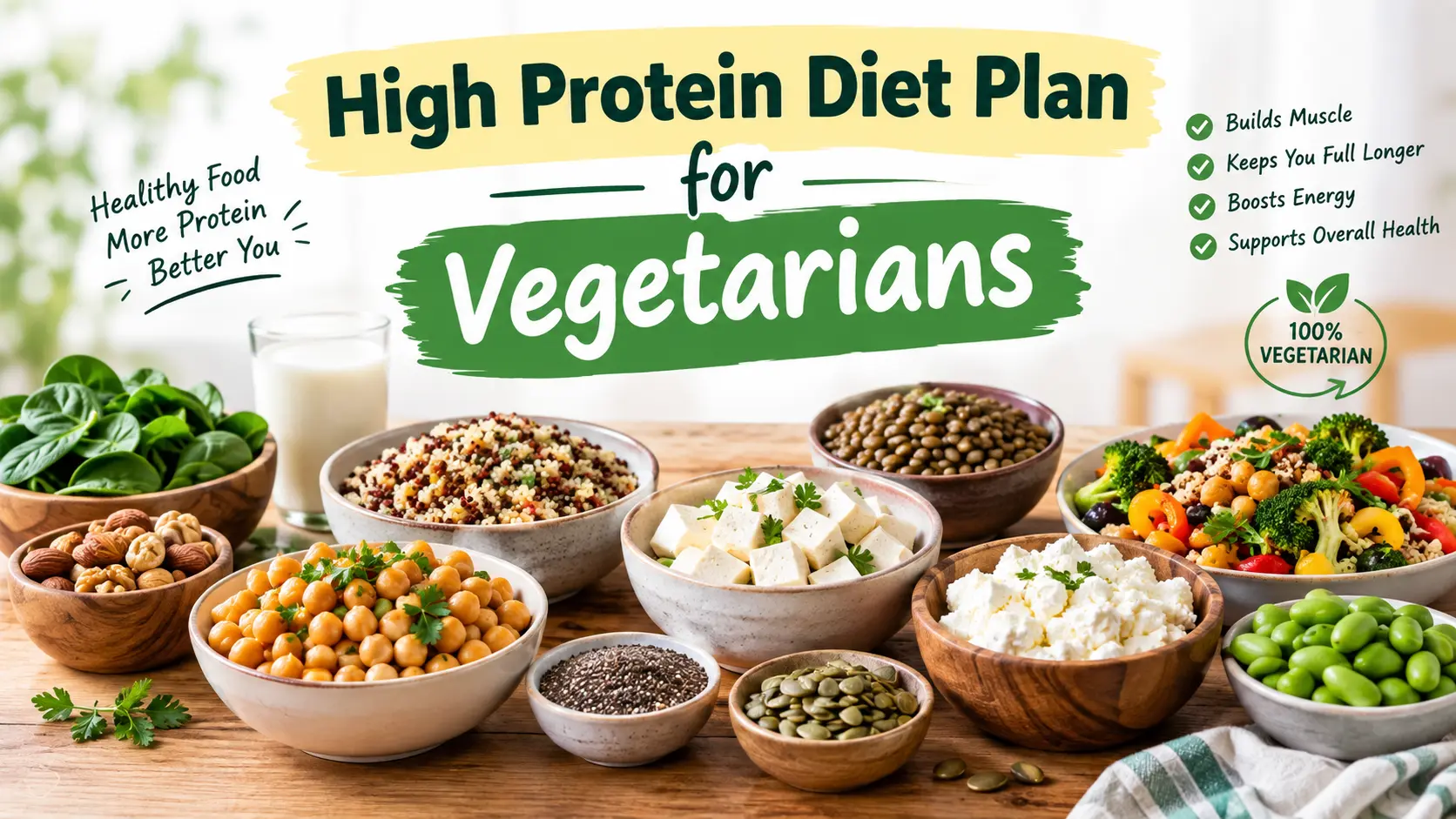
A high protein diet plan for vegetarians doesn’t need protein powder or other grocery items. Dal, rajma, paneer, curd, soya, and sattu can do this.
This post gives you a High Protein Diet Plan for Vegetarians with serving sizes and protein counts. Treat the numbers as a starting point and adjust them to your body and routine.
My Protein Reality Check
I’m vegetarian, and I used to think I ate high protein because dal showed up on my plate daily. Then I tracked one normal week in an app.
I averaged about 40 g a day at 68 kg. I was training three times a week and wondering why I felt flat by 6 pm.
The fix was boring. Curd at lunch. Roasted chana instead of biscuits. Soya chunks twice a week. After about six weeks, my evening slump got better and I stopped feeling sore for days after leg day.
My friend of mine, Susmita, went through the same thing. She’s 28, works a desk job, and weight around 58 kg. Her days were poha, dal-roti, and khichdi, with namkeen in between.
She was always hungry. Her protein was about 35 g. We added curd to breakfast, swapped namkeen for chana, and put paneer or tofu in dinner twice a week.
She reached about 60 g without cooking anything new.
That’s one person’s result, not a promise. Your body may respond differently.
How Much Protein Do Vegetarians Need Per Day?
Healthy adults need roughly 0.8 to 1 g of protein per kg of body weight. India’s ICMR-NIN guidelines put the RDA near 0.83 g/kg. If you lift weights or train hard, sports nutrition research suggests 1.4 to 2.0 g/kg.
Daily protein requirements by body weight
| Body weight | General adult (0.8–1 g/kg) | Regular training (1.4–2 g/kg) |
|---|---|---|
| 50 kg | 40–50 g | 70–100 g |
| 60 kg | 48–60 g | 84–120 g |
| 70 kg | 56–70 g | 98–140 g |
| 80 kg | 64–80 g | 112–160 g |
How to calculate your daily protein requirement
Protein per day = body weight (kg) × protein target (g/kg/day)
I weigh 68 kg and lift three days a week, so I use 1.5 g/kg. That’s about 102 g. Susmita doesn’t train hard, so she uses 1.0 g/kg, which is about 58 g.
Pick the low end if you’re new to this. Move up only if your training and appetite support it.
Best High-Protein Vegetarian Foods in India
Dairy protein sources
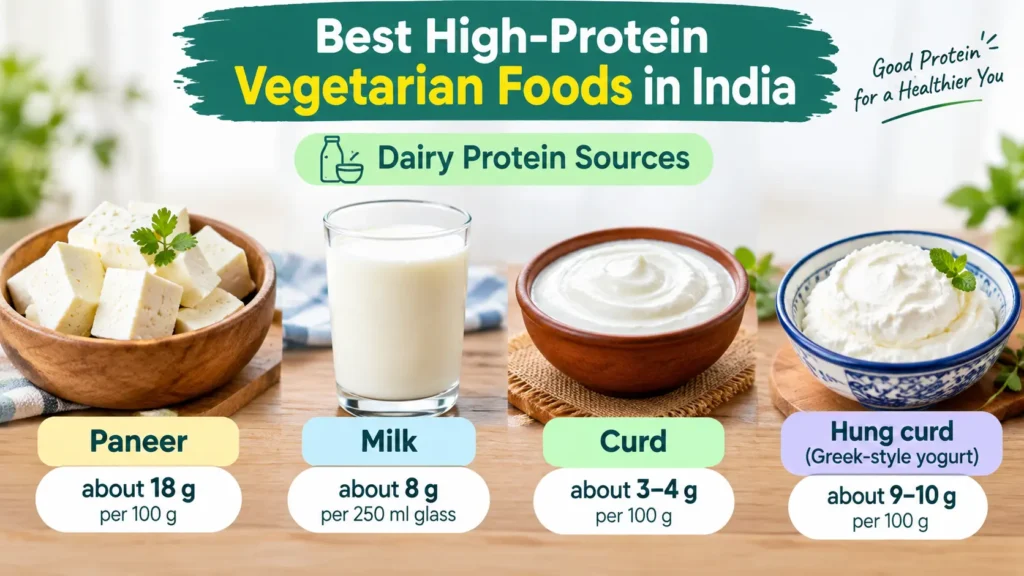
- Paneer: about 18 g per 100 g
- Milk: about 8 g per 250 ml glass
- Curd: about 3–4 g per 100 g
- Hung curd (Greek-style yogurt): about 9–10 g per 100 g
Insider tip: you can make hung curd at home. Tie regular curd in a muslin cloth and hang it for 2 hours. It costs a fraction of branded Greek yogurt.
Plant-based protein sources
These are the plant based protein sources for muscle building I rely on most:
- Soya chunks: about 15 g per 30 g dry
- Tofu (firm): about 12 g per 100 g
- Moong and masoor dal: about 7 g per 30 g dry
- Rajma and chickpeas: about 6–7 g per 30 g dry
- Besan and sattu: about 6–7 g per 30 g
- Peanuts, almonds, seeds: about 5–8 g per 30 g
High-protein vegetarian foods on a budget
Prices swing by city and season, so I rank by cost level instead of quoting rupees.
| Food | Serving | Protein | Cost level | Best use |
|---|---|---|---|---|
| Soya chunks | 30 g dry | ~15 g | Low | Curry, pulao |
| Moong dal | 30 g dry | ~7 g | Low | Chilla, dal |
| Roasted chana | 40 g | ~8 g | Low | Snack |
| Sattu | 40 g | ~8 g | Low | Drink, paratha stuffing |
| Curd | 150 g | ~5 g | Low | Raita, bowls |
| Paneer | 100 g | ~18 g | Medium | Bhurji, stir-fry |
| Tofu | 150 g | ~18 g | Medium | Bhurji, curry |
Pro-Tip: Soak soya chunks in hot water for 10 minutes, then squeeze them dry. Most people skip the squeeze, and that's why they taste bland or beany. Cook them in a strong masala and nobody will guess.7-Day High Protein Diet Plan for Vegetarians
A high protein diet plan for vegetarians works when every meal has one clear protein item. Aim for 15 to 25 g per meal.
This plan gives roughly 65 to 75 g a day, which suits a 60 to 70 kg adult with moderate activity. Add portions if you train harder.
Dal and soya weights are dry. Protein numbers are estimates (±10%) based on standard food composition data.
| Day | Breakfast | Lunch | Snack | Dinner | Total |
|---|---|---|---|---|---|
| 1 | 2 moong chillas (40 g dal) + 150 g curd: 15 g | 1 cup rajma + 1 cup rice + salad: 15 g | 40 g roasted chana + 1 glass milk: 16 g | 120 g paneer bhurji + 2 roti: 28 g | ~74 g |
| 2 | 2 besan chillas (50 g besan) + 150 g curd: 16 g | 1 cup chole + 2 roti: 15 g | 1 glass milk + 20 g almonds: 12 g | 200 g tofu bhurji + 1 cup rice: 28 g | ~71 g |
| 3 | 50 g oats + milk + 1 tbsp seeds: 16 g | 1 cup dal + 2 roti + 100 g curd: 19 g | Sattu drink (40 g): 8 g | Soya curry (40 g dry) + 2 roti: 26 g | ~69 g |
| 4 | Sandwich with 80 g paneer, 2 slices bread: 19 g | Chana rice bowl + 100 g curd: 18 g | 1 cup sprouts + 20 g peanuts: 12 g | 1.5 cups dal khichdi + 150 g curd: 19 g | ~68 g |
| 5 | 3 small moong dosas + 1 cup sambar: 18 g | 1 cup rajma + 2 roti: 15 g | 150 g hung curd: 14 g | 120 g paneer stir-fry + 1 roti: 25 g | ~72 g |
| 6 | 2 besan-paneer chillas: 18 g | Soya pulao (30 g dry) + raita: 22 g | 30 g roasted soy nuts: 11 g | 1 cup dal + 2 roti + vegetables: 15 g | ~66 g |
| 7 | 50 g oats + milk + 20 g peanuts: 19 g | 1 cup chole + rice + 100 g curd: 18 g | 200 g curd + 1 tbsp seeds: 9 g | 150 g tofu or 100 g paneer curry + 2 roti: 24 g | ~70 g |
Make it work in real life:
- On Sunday, soak and boil a big batch of chana or rajma. It covers three lunches.
- Pack curd and roasted chana in your bag. Office snacks are where most plans fail.
- Don’t panic if you miss a meal. Add 100 g of hung curd or a glass of milk later.
How to Get 100g of Protein a Day as a Vegetarian
A sample high-protein day
This is close to my gym-day eating.
- Breakfast: 3 moong chillas (60 g dry dal) with 150 g hung curd: ~28 g
- Lunch: 1.5 cups rajma, 1 cup rice, 150 g curd: ~22 g
- Snack: 1 glass milk and 30 g peanuts: ~16 g
- Dinner: Soya curry (40 g dry), 2 roti, 100 g curd: ~31 g
Total: about 97 g. Add a spoon of seeds and you pass 100. This fits a 60 to 70 kg person who trains. It isn’t a target for everyone.
Can you get enough protein without protein powder?
Yes, for most people. I used powder for two months during a hectic work phase, then dropped it with no change in my results. Powder makes sense when your appetite is small or your day is chaotic. Otherwise, food does it.
How to increase protein without eating too much food
Pick dense foods. Soya chunks, tofu, paneer, and hung curd give more protein per bite than rice or roti. Swap regular curd for hung curd. Keep roasted chana on your desk. These small swaps can add 15 to 20 g a day.
High-Protein Vegetarian Diet Plan for Weight Loss
Protein keeps you full, but it doesn’t melt fat. You still need to eat fewer calories than you burn.
Neha’s biggest win wasn’t a new food. It was fewer random snacks. What helped her:
- Half the plate vegetables, then a protein item, then a small portion of grain.
- Tofu, sprouts, and hung curd as snacks.
- Chillas instead of fried parathas. Plain buttermilk instead of sweet lassi.
- 1 to 2 teaspoons of oil or ghee per meal.
She also stopped fearing paneer. Portion size, not the food itself, was the issue. She lost weight slowly, and that pace was easy to keep.
High-Protein Vegetarian Diet Plan for Muscle Gain
Protein alone won’t build muscle. You need enough calories and regular resistance training too. A desk worker and a lifter need very different amounts.
Before training, I eat something light like oats with milk or a banana with peanuts. After training, I aim for 20 to 30 g of protein.
Paneer sandwich, tofu bhurji with roti, or sattu with milk all work. Spread protein over 3 to 5 meals. One giant dinner wastes most of the effort.
Vegan Alternatives for a High-Protein Diet
- Use tofu instead of paneer.
- Use fortified soy milk instead of dairy milk.
- Lean on lentils, chickpeas, soya chunks, and beans.
A fully plant-based diet needs a vitamin B12 source because plants don’t supply it reliably. Watch iron, calcium, and omega-3 intake too. Ask a doctor or dietitian about supplements.
Common Mistakes to Avoid on a Vegetarian High-Protein Diet
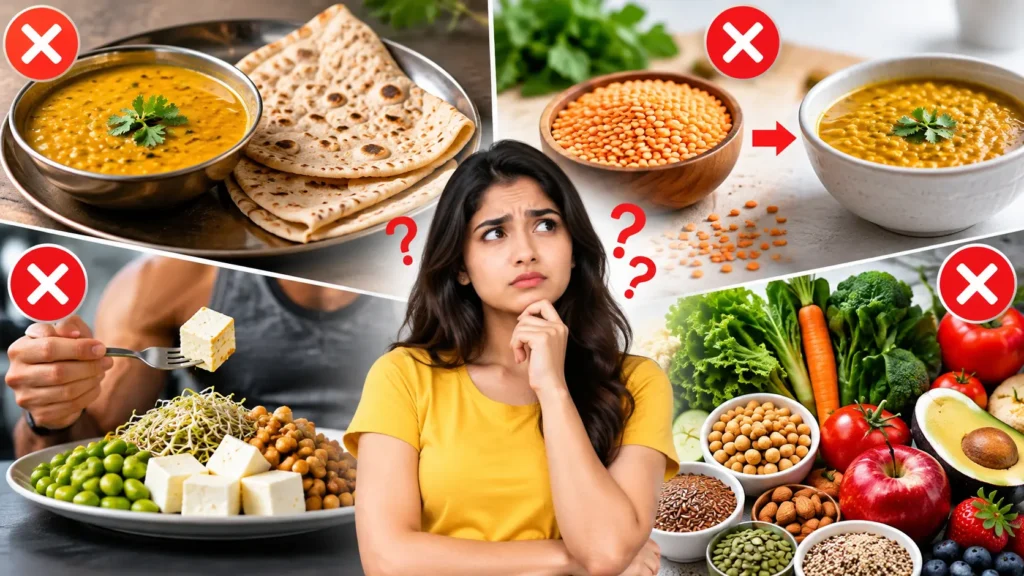
Depending only on dal and roti
My own mistake for years. One bowl of dal with two rotis gives roughly 12 to 15 g of protein. Add curd, paneer, soya, or sprouts to close the gap.
Counting dry protein values as cooked values
Dal absorbs water when cooked. 30 g dry becomes about 90 g cooked. I once logged 100 g of cooked dal using the dry-weight number and thought I’d eaten a mountain of protein. Check which one your app or label uses.
Eating too much protein without considering your needs
More isn’t better. Extra protein adds calories and can upset your stomach. Match your intake to your weight and activity.
Ignoring other nutrients
Fiber, iron, B12, calcium, and healthy fats matter too. Keep vegetables, fruit, and whole grains on the plate.
Frequently Asked Questions
What is the best high-protein diet plan for vegetarians?
One that fits your weight, budget, and routine. Build each meal around dal, paneer, tofu, soya, curd, or sprouts, and start with the 7-day plan above.
How can a vegetarian get 100g of protein daily?
Combine soya chunks, paneer, rajma, hung curd, milk, and peanuts across four meals, like the sample day above.
Which vegetarian food has the most protein?
Soya chunks, at about 50 g per 100 g dry. Paneer has about 18 g per 100 g.
Can vegetarians build muscle without eggs?
Yes. Dairy, soy, and legumes can provide enough protein if you train and eat enough calories.
Is paneer or tofu better for protein?
Per 100 g, paneer has about 18 g and firm tofu about 12 g. Tofu is lighter in calories and dairy-free. Both work.
Can I follow a high-protein vegetarian diet without supplements?
Yes. Most people can meet their target with food.
What are the cheapest high-protein vegetarian foods in India?
Soya chunks, dals, roasted chana, sattu, and curd.
How much protein should a 60kg vegetarian eat daily?
About 48 to 60 g for general health, and 84 to 120 g with regular training.
Is a high-protein vegetarian diet good for weight loss?
It can help you feel full, but you still need a calorie deficit.
Can I follow a high-protein diet if I have kidney disease?
Speak to your treating doctor or a renal dietitian before raising your protein intake. Needs vary a lot with kidney conditions.
Final Takeaway
Put one solid protein item in every meal. Spread it across the day. Follow the 7-day plan, weigh your portions for a week, then adjust to your body and goals. Small habits you can keep beat strict plans you drop in week two.
Disclaimer: This article is general information, not medical advice. Consult a doctor or registered dietitian if you have a health condition.