
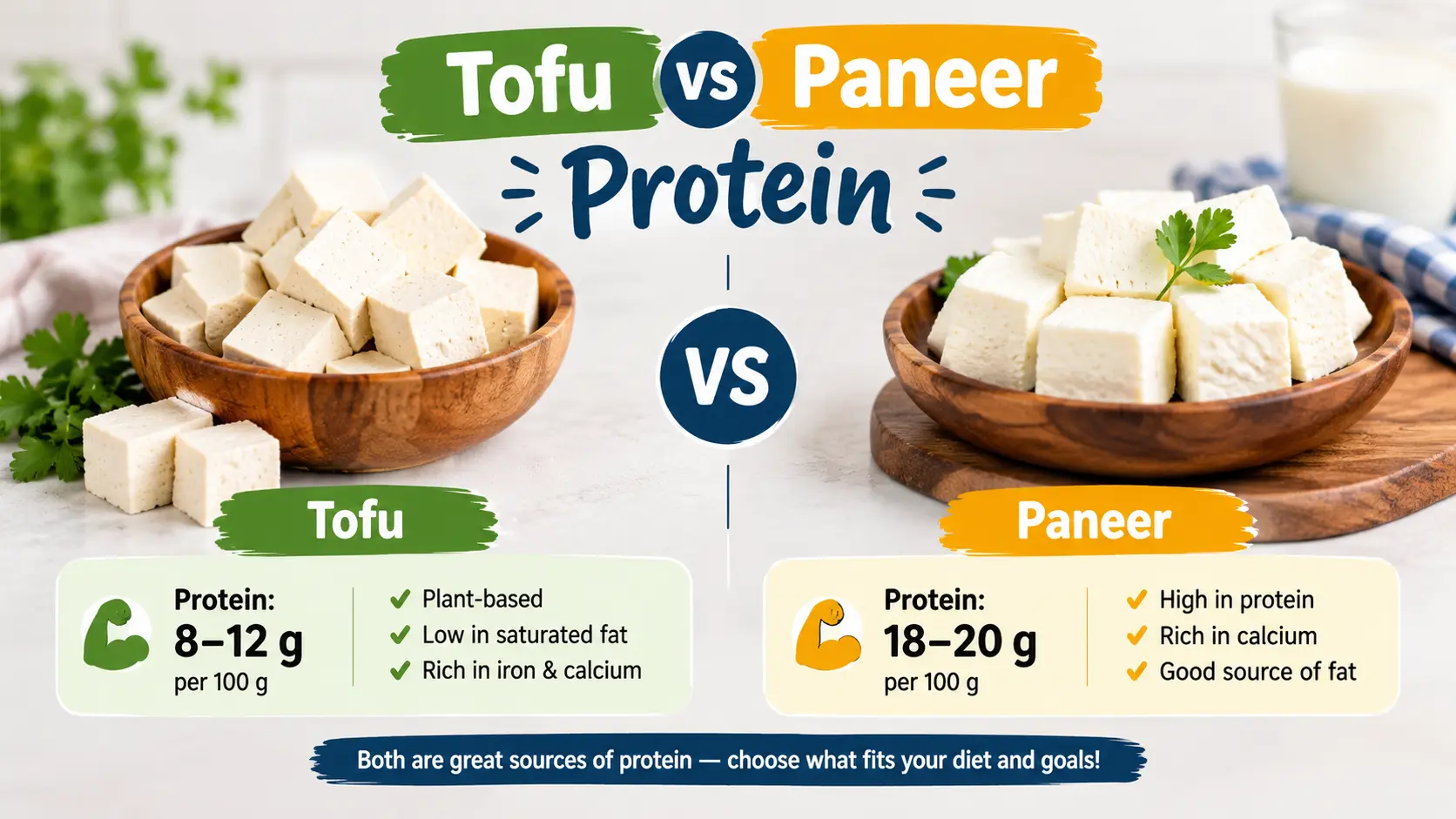
Every Indian gym has this debate. Someone swears by paneer. Someone else says tofu is cleaner. Both are half right.
I’ll settle the tofu vs paneer protein question with numbers, then tell you where the numbers mislead.
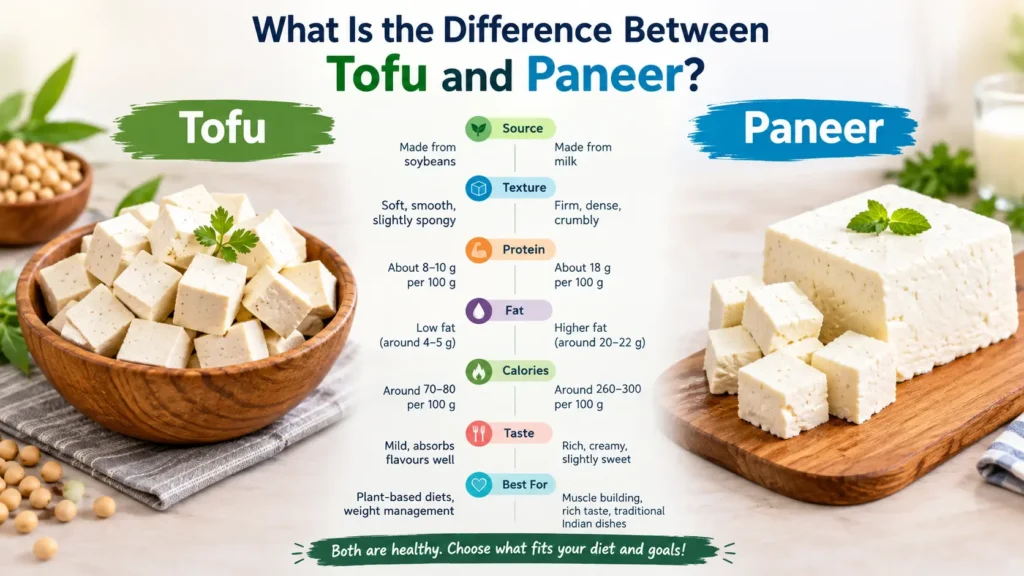
What Is the Difference Between Tofu and Paneer?
Paneer is a fresh Indian cheese made by curdling hot milk with lemon juice or vinegar. Tofu is a pressed curd made from soy milk.
Per 100g, full-fat paneer gives about 18 to 20g protein and 20g fat. Firm tofu gives 12 to 17g protein and 7 to 9g fat.
Same method. Different animal, or no animal at all.
Why Tofu Numbers Look All Over the Place
Search online and you’ll see tofu at 8g protein on one site and 17g on another. Nobody is lying. Water is the difference.
Silken tofu sits around 5 to 8g. Regular lands near 8 to 10g. Firm and extra-firm reach 12 to 17g.
So when a friend says tofu has half the protein of paneer, ask which tofu. Chances are he ate the soft one.
Tofu vs Paneer Protein Per 100g
USDA Food Data Central lists firm, calcium-set tofu at roughly 17g protein and 144 calories. Paneer varies by brand and milk, so I give ranges.
| Per 100g | Full-fat paneer | Firm tofu | Soft tofu |
|---|---|---|---|
| Protein | 18–20g | 12–17g | 5–8g |
| Calories | 265–300 | 120–145 | 55–75 |
| Fat | 20–23g | 7–9g | 3–4g |
| Saturated fat | 12–14g | 1–2g | under 1g |
Paneer gives more protein per gram. Fine. But look at calories. Tofu gives you about twice the protein for every calorie. That is the real story.
Pro-Tip: Check protein per 100g, never per pack. A 400g block can look high protein on the front. The back often says something ordinary.
Which Is Better for Weight Loss?
Tofu, mostly. Take a 150g serving:
- Paneer: about 27g protein, 420 calories
- Firm tofu: about 22g protein, 200 calories
You lose 5g of protein and save 220 calories. Five dinners a week, that’s over 1,000 calories.
But here’s the catch. Plain tofu is boring. People fix that with extra oil, cream or butter. Then the saving disappears. If you can’t eat tofu without drowning it, you picked the wrong plan.
A trick that works: use less paneer and more tofu in the same sabzi. Say 80g paneer plus 100g tofu. The gravy still feels rich.
Which Is Better for Building Muscle?
Your daily total decides this, not one ingredient. The International Society of Sports Nutrition suggests 1.4 to 2.0g protein per kg of body weight for active people.
For a 70kg person, that’s 98 to 140g. One plate of either food won’t cover it. You need dal, curd, eggs, chana or whey around it.
Paneer suits you if you struggle to eat enough. A small portion packs a lot of calories. Tofu suits you if you want protein without extra fat.
Which Has Better Protein Quality?
Both give you all nine essential amino acids.
Paneer’s protein is mostly casein, from milk. Soy protein is plant-based and complete too. Milk protein digests slightly better. The gap is small, and a normal Indian thali closes it anyway.
Does Tofu Have Estrogen?
No, not in the way people fear. Tofu has isoflavones, plant compounds that resemble estrogen but act much weaker in the body.
Large reviews of human studies haven’t found that normal soy intake lowers testosterone in men. A few servings a week is fine for most adults.
Two exceptions. Skip it with a soy allergy. Ask your doctor first if you have a thyroid problem.
Calcium, Iron and B12
Tofu surprises people here.
Calcium-set tofu can match paneer on calcium. Look for calcium sulfate in the ingredients. Tofu also brings iron and a little fiber. Paneer has zero fiber.
B12 goes the other way. Paneer has some. Tofu has none unless the brand fortifies it. If you’re vegan, sort out B12 separately and ask your doctor about the dose.
Taste, Cooking and Cost
Where Paneer Wins
Gravy. Palak paneer, shahi paneer, butter masala. Paneer stays soft and sweet in all of them. Kids eat it without a fight.
Where Tofu Wins
Dry dishes. Tikka, bhurji, stir-fries. Tofu grabs masala better because it has no strong taste of its own. Scrambled with onion, tomato and turmeric, it passes for egg bhurji.
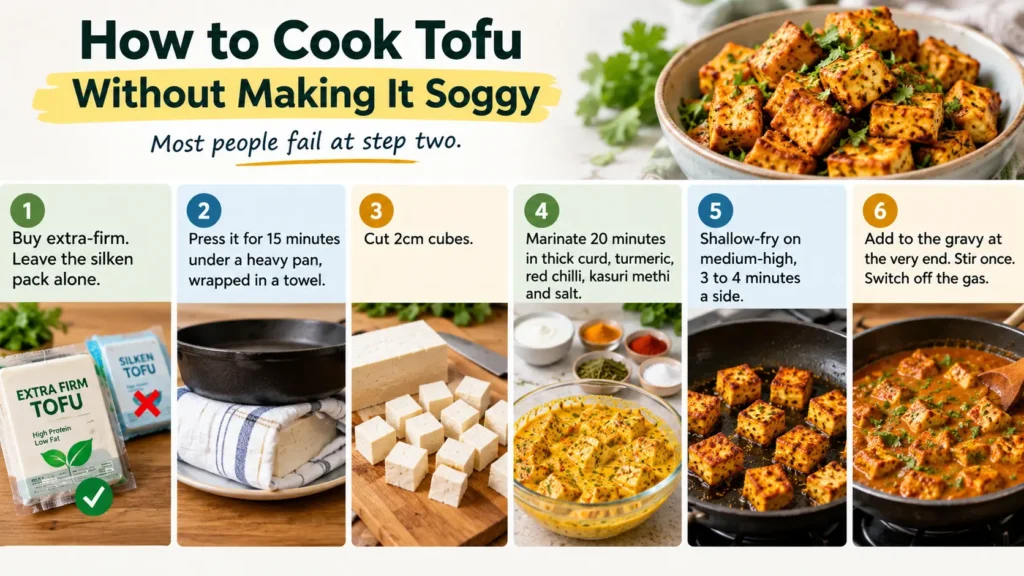
How to Cook Tofu Without Making It Soggy
Most people fail at step two.
- Buy extra-firm. Leave the silken pack alone.
- Press it for 15 minutes under a heavy pan, wrapped in a towel.
- Cut 2cm cubes.
- Marinate 20 minutes in thick curd, turmeric, red chilli, kasuri methi and salt.
- Shallow-fry on medium-high, 3 to 4 minutes a side.
- Add to the gravy at the very end. Stir once. Switch off the gas.
Pro-Tip: Freeze the block overnight, thaw it, then press. It turns chewy and layered, closer to paneer than you’d expect.
What About Cost?
Homemade paneer from a litre of milk gives about 150 to 200g, depending on the fat. Packaged paneer costs more per 100g than homemade.
Tofu prices swing by city and brand. Don’t compare per pack. Divide the price by the protein per 100g and compare that number.
So Which Should You Choose?
Pick paneer if you want to gain weight, love creamy gravies, avoid soy, or cook for fussy eaters.
Pick tofu if you’re cutting calories, watching saturated fat, eating vegan, or want some fiber.
Or rotate. I’d say that’s the better answer. A diet you can repeat for a year beats a perfect one you quit in March.
Frequently Asked Questions
Does tofu have more protein than paneer?
Usually not. Full-fat paneer has 18 to 20g per 100g. Firm tofu has 12 to 17g.
Can I swap tofu for paneer in any recipe?
In most dry dishes, yes. In very creamy gravies, the texture feels different.
Is low-fat paneer a good middle path?
Often. Many brands keep protein near 18g and cut fat. Read the label, since brands differ.
How much should I eat in a day?
A 100 to 150g serving suits most people. Fit it to your protein target and calories.
Note: This is general nutrition information, not medical advice. Consult a doctor or dietitian if you have thyroid issues, kidney disease or high cholesterol.