
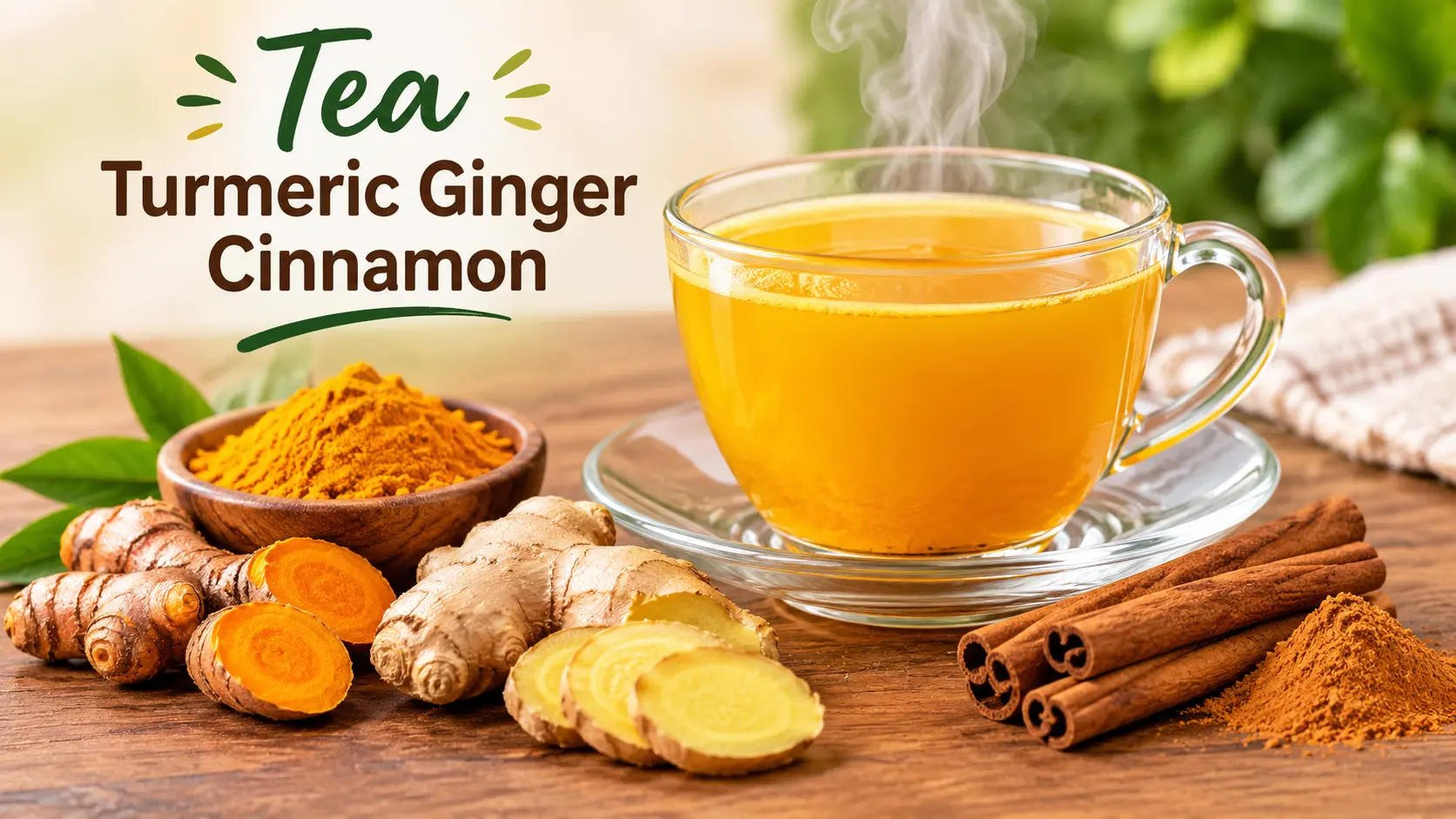
I drink tea turmeric ginger cinnamon almost every evening from October to March. It started after a bad cold two winters ago. I wanted something warm that wasn’t coffee or sugary chai.
My first batch tasted like dusty mud. My tenth batch tasted great. This post shares what I learned along the way, plus what the research says and what it doesn’t.
What Is Turmeric Ginger Cinnamon Tea?
Turmeric ginger cinnamon tea is a warm herbal drink. You simmer turmeric, ginger, and cinnamon in water. Each spice brings plant compounds, such as curcumin, gingerol, and cinnamaldehyde. The drink has no caffeine and very few calories.
The flavor is earthy, spicy, and a little sweet. Ginger gives the bite. Cinnamon rounds it out. Turmeric adds color and a mild, peppery depth.
Cooks in India have used these spices for centuries. In my family’s kitchen in Delhi, turmeric milk and ginger tea were standard cold-weather drinks. Combining all three is a newer habit, but it works well.

What Is Turmeric Ginger Cinnamon Tea Good For?
Let me be clear first. This tea is not medicine. It will not cure disease. But each spice has real research behind it, and the combination makes a useful daily habit.
Turmeric: Inflammation Support
Turmeric contains curcumin. Lab and human studies show curcumin has anti-inflammatory effects. Some trials found that curcumin supplements eased knee osteoarthritis pain. Results are mixed, though.
Here is the catch. Your body absorbs curcumin poorly. A tea alone gives you a small dose compared with a supplement. That is why I add black pepper, which I explain below.
Ginger: Nausea and Digestion
Ginger has the strongest evidence of the three for nausea. Reviews of clinical trials support it for morning sickness and for nausea after surgery. It may also help with muscle soreness and mild stomach upset.
I reach for ginger tea after a heavy meal. It settles my stomach faster than anything else I’ve tried.
Cinnamon: Blood Sugar Support
Several studies suggest cinnamon may lower fasting blood sugar a little in people with type 2 diabetes. The effect is modest and varies between studies. Cinnamon tea is not a replacement for diabetes treatment.
Cinnamon also adds natural sweetness. That helps me use less honey.
Benefits of Turmeric Ginger and Cinnamon Tea: A Quick Summary
Here are the turmeric ginger cinnamon tea benefits people most often report, along with how strong the evidence is:
- Eases nausea: Good evidence for ginger.
- Supports joint comfort: Moderate evidence for turmeric and ginger.
- Helps with digestion: Reasonable evidence for ginger. Many people also feel better after a warm drink.
- May support steady blood sugar: Modest evidence for cinnamon.
- Provides antioxidants: All three spices contain them.
- Gives you a caffeine-free evening drink: This one is a fact, not a claim.
Notice what is missing from this list. I did not promise fast weight loss or a detox. No tea does that. Be careful with any blog that says otherwise.
How to Make Tea Turmeric Ginger Cinnamon at Home
This recipe makes two cups. It takes about 15 minutes.
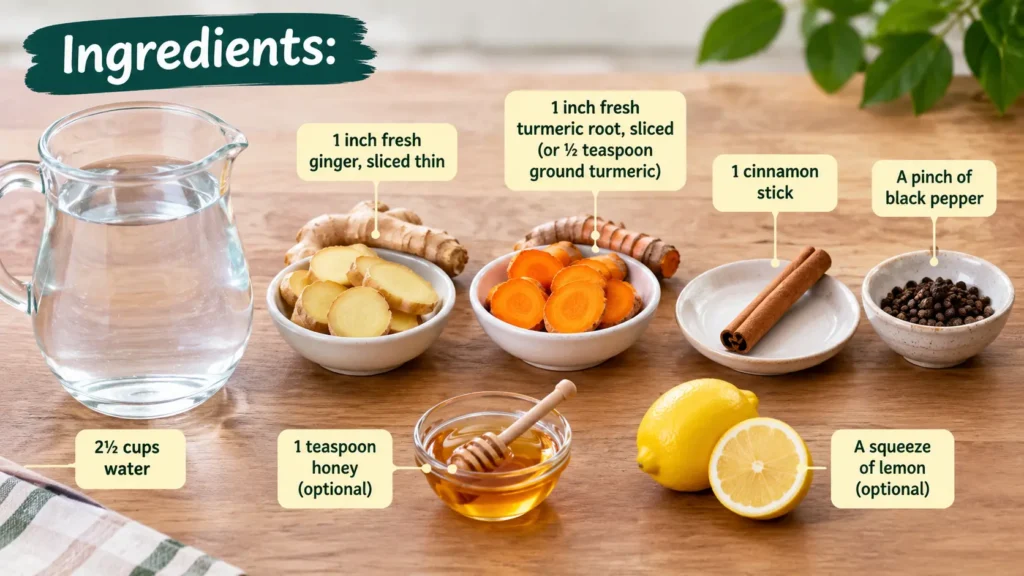
Ingredients:
- 2½ cups water
- 1 inch fresh ginger, sliced thin
- 1 inch fresh turmeric root, sliced (or ½ teaspoon ground turmeric)
- 1 cinnamon stick
- A pinch of black pepper
- 1 teaspoon honey (optional)
- A squeeze of lemon (optional)
Steps:
- Pour the water into a small pot and add the ginger, turmeric, and cinnamon stick.
- Bring it to a boil, then lower the heat.
- Simmer for 10 minutes. Longer gives a stronger, spicier cup.
- Add the pinch of black pepper in the last minute.
- Strain the tea into two mugs.
- Stir in honey and lemon once the tea cools slightly.
💡 Pro-Tip: Black pepper contains piperine. One well-known 1998 study found piperine raised curcumin absorption in humans by about 2,000%.
Curcumin also dissolves in fat. So I stir a splash of whole milk or coconut milk into my cup. That small change makes the tea work harder for you.
Fresh or Ground Spices?
I use both. Fresh ginger and turmeric taste brighter and cleaner. Ground turmeric is cheaper and easier. If you use ground spices, strain through a fine mesh or a coffee filter. Otherwise you get sludge at the bottom.
Wear gloves or an old apron when you slice fresh turmeric. It stains fingers, cutting boards, and countertops yellow.
Insider Tips From My Kitchen
I made plenty of mistakes before I got this right. Learn from them.
- Don’t boil the honey. Heat breaks down some of its qualities. Add it after the tea cools a bit.
- Use a cinnamon stick, not powder. Powder turns gritty and cloudy.
- Make a big batch. I brew four cups on Sunday and keep it in the fridge. It stays good for about three days. I reheat a cup each evening.
- Start small. Too much ginger burns your throat. Begin with half an inch and work up.
- Grate for more punch. Grated ginger releases more flavor than slices, and it needs only five minutes of simmering.
Which Cinnamon Should You Use?
This matters more than most people think. Most grocery stores sell cassia cinnamon. Cassia contains coumarin, a compound that can stress the liver in large amounts.
The European Food Safety Authority sets a tolerable daily intake of 0.1 mg of coumarin per kilogram of body weight.
Ceylon cinnamon, sometimes called true cinnamon, contains far less coumarin. I use Ceylon sticks for my daily tea. They cost a bit more, but I feel better drinking it every day.
Who Should Be Careful?
Most healthy adults tolerate this tea well. But a few groups should talk to a doctor first:
- People on blood thinners. Ginger and turmeric may add to the effect of drugs like warfarin.
- People with gallstones or bile duct problems. Turmeric can trigger gallbladder contractions.
- People on diabetes medication. Cinnamon may lower blood sugar further.
- Pregnant women. Small food amounts are usually fine. Medicinal amounts are a different story. Ask your doctor.
- Anyone with a scheduled surgery. Doctors often ask patients to stop spices like these beforehand.
If you take any regular prescription, ask your pharmacist. It takes two minutes.
Final Thoughts
Tea turmeric ginger cinnamon is simple, cheap, and easy to make. It will not fix everything. But it gives you a warm, caffeine-free ritual backed by real research on each ingredient.
Start with the basic recipe. Add black pepper and a splash of milk. Pick Ceylon cinnamon if you drink it daily. And if you take medication or have a health condition, check with your doctor first.
Try it for a week and see how you feel. I think you’ll keep making it.
Common Questions About Turmeric Ginger Cinnamon Tea
Can I drink it every day?
Yes, for most healthy adults. I drink one or two cups daily. Stick to Ceylon cinnamon if you plan to drink it daily.
What is the best time to drink it?
There is no perfect time. I drink it in the evening because it’s caffeine-free and soothing. Some people like it after meals for digestion. Others drink it in the morning.
Does turmeric ginger cinnamon tea help you lose weight?
No tea melts fat. Small studies show ginger and cinnamon may slightly affect appetite and blood sugar. But the effect is small. This tea can replace a sugary drink, and that swap helps more than the spices do.
Can I drink it cold?
Yes. I pour leftover tea over ice in summer and add lemon. It tastes sharper and more refreshing.
Why does my tea taste bitter?
You probably boiled it too long or used too much turmeric. Cut the simmer to 8 minutes and use less turmeric next time. A little honey also balances it.