
One day, you wake up with your eyelids glued shut. Pry them open and the whites of your eyes are pink, everything’s a bit blurry, and blinking doesn’t fix it right away.
Sound familiar? Every monsoon, this exact scene plays out in homes across India, on repeat. Doctors call it conjunctivitis. Almost everyone else calls it eye flu.
You want a straight answer on the symptoms of eye flu and what actually helps, not a wall of maybes. So here’s a doctor-backed breakdown of what to look for, what eye flu treatment at home really does, and a few myths worth dropping.
What Are the Symptoms of Eye Flu?
Eye flu is inflammation of the conjunctiva, the thin, clear layer covering the white of your eye and the inside of your eyelid. Irritation or infection makes its blood vessels swell, and that’s what turns the eye pink or red.
Watch for:
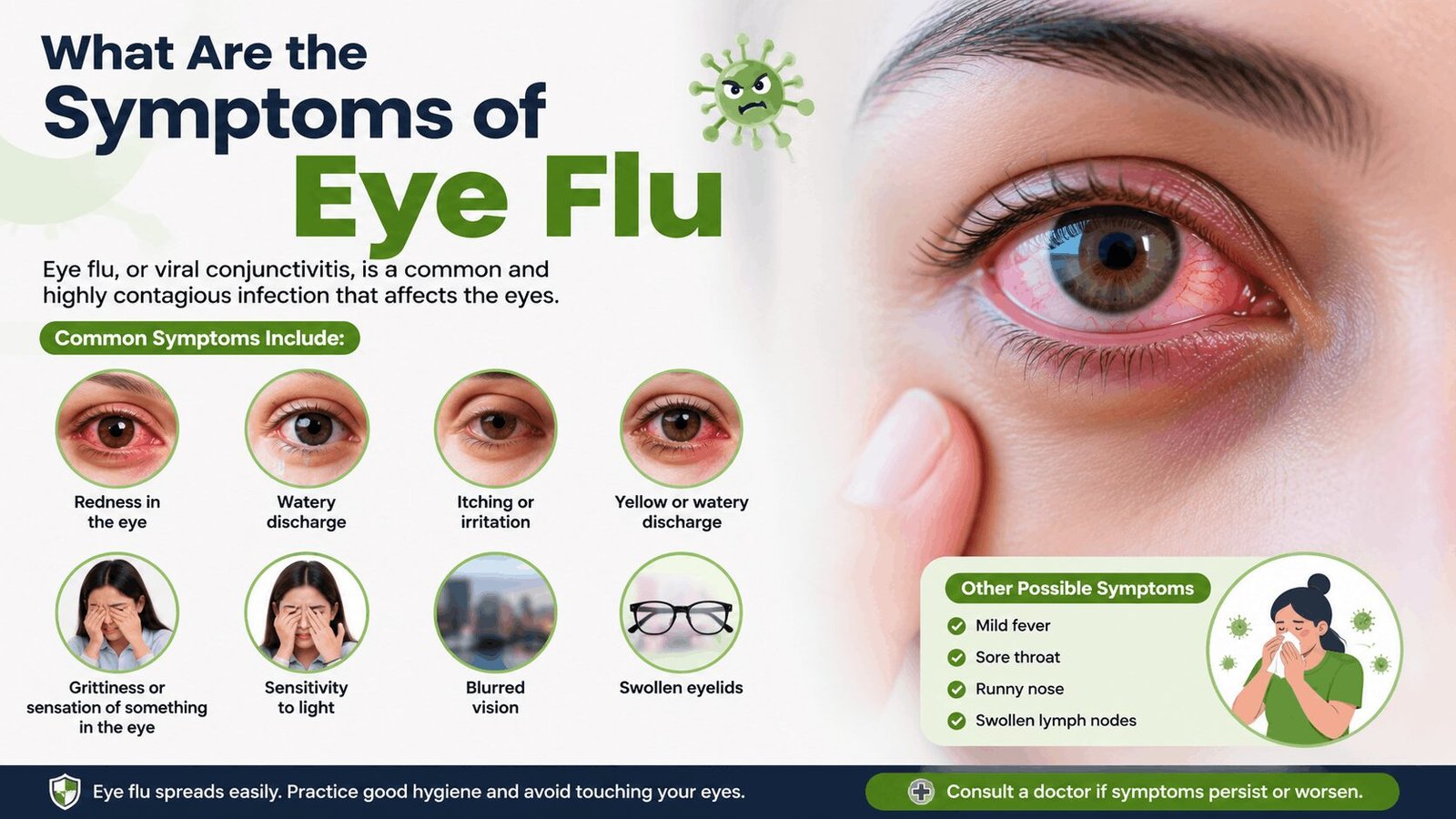
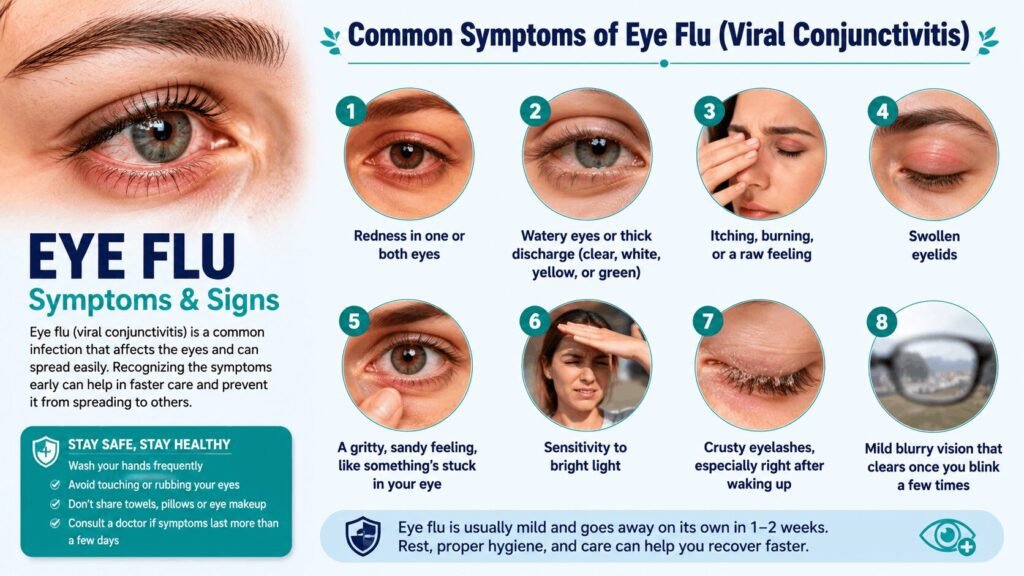
- Redness in one or both eyes
- Watery eyes or thick discharge (clear, white, yellow, or green)
- Itching, burning, or a raw feeling
- Swollen eyelids
- A gritty, sandy feeling, like something’s stuck in your eye
- Sensitivity to bright light
- Crusty eyelashes, especially right after waking up
- Mild blurry vision that clears once you blink a few times
Not everyone gets the full list. Viral eye flu usually starts in one eye and jumps to the other within a day or two. Bacterial eye flu tends to hit both eyes together, with thicker, stickier discharge.
Viral, Bacterial, or Allergic? Why It Matters
One label, three very different causes. Here’s the part most eye flu articles gloss over: the treatment that helps one type can be pointless, or even risky, for another.
Viral Eye Flu
The type behind most monsoon outbreaks in India, usually caused by adenovirus. It spreads through hand-to-eye contact, shared towels, even doorknobs.
Watery discharge, one-sided redness that spreads, sometimes a scratchy throat too. No medicine kills the virus directly. You just ride it out — 7 to 14 days, typically.
Bacterial Eye Flu
Thicker, yellow or green discharge that glues your eyelashes shut overnight. Shows up more in young children than adults. A doctor may prescribe antibiotic drops, but plenty of mild cases clear up in 2 to 5 days without them.
Allergic Eye Flu
Itchy, watery eyes, but nobody around you is catching it. That’s usually a sign it’s allergies, not an infection, especially if you already deal with hay fever, asthma, or eczema. No contagion risk here, since nothing is spreading from person to person.
Why Eye Flu Spreads So Fast Every Monsoon
In 2023, India saw one of its sharpest eye flu spikes in years. Mumbai hospitals reported a 20% jump in cases within weeks. Haryana logged more than 4,200 cases.
Schools in Agra sent home advisories after eye surgeons started seeing over a hundred children a day with red, swollen eyes.
Not a one-off. Eye clinics see this pattern almost every monsoon. Humidity keeps viruses alive longer on surfaces, and waterlogged streets plus packed classrooms make hand-to-eye contact nearly impossible to dodge.
Here’s how it usually plays out at home: a child comes back from school with one red eye. By dinner, the other eye’s red too.
A day later, a sibling wakes up with the same symptoms — viral eye flu working through a household exactly the way it worked through the classroom.
AIIMS Delhi’s eye specialists have reminded the public not to panic, since most cases are mild and heal on their own.
Fair enough, but mild isn’t the same as ignore it. Catching the early symptoms of eye flu fast is what keeps it from taking down your whole house.
Does Diet Actually Affect Eye Flu Healing?
You’ll find this advice everywhere in India the moment eye flu season starts: skip spicy food, skip sour food, eat “cooling” things instead. It gets repeated so often it sounds like settled science.
It isn’t, really. Check CDC, AAO, or Mayo Clinic guidance on conjunctivitis and food doesn’t come up once. No major eye-health body lists spicy or sour food as something that slows healing or worsens the infection itself.
Where does the belief come from, then? Mostly Ayurvedic ideas about inflammation and heat in the body, plus a simpler fact: acidic or spicy food can sting already-irritated eyes if any of it reaches them, which has nothing to do with the infection underneath.
Here’s the honest take: if skipping chilli and tamarind makes you more comfortable, there’s no harm in it. But it won’t shorten your eye flu, and eating normally won’t make it worse. Treat the diet advice as comfort, not cure.
Can Eye Flu Come Back, and Can It Damage Your Vision?
Two questions people quietly worry about but rarely find a straight answer to.
Can it come back? Yes. The American Academy of Ophthalmology is direct about this — you don’t build immunity after one bout of viral conjunctivitis.
Catch it once, and you can catch it again next monsoon, or even the same season if you’re re-exposed. Allergic eye flu returns even more predictably, since it flares up whenever you meet the same allergen again.
Can it damage your vision? Almost never, for typical cases. Most viral and bacterial eye flu heals completely within one to two weeks, with zero lasting effect on eyesight.
The exception is rare, severe infections — untreated bacterial conjunctivitis from certain aggressive bacteria, or a severe adenovirus strain called EKC which can affect the cornea and threaten vision if left alone. That’s exactly why the warning signs further down aren’t optional reading.
Eye Flu Treatment at Home: What Actually Helps
Most eye flu cases don’t need a hospital visit, just consistent basic care. Here’s what actually works for eye flu treatment at home:
- Cold compress. A clean, damp cloth over closed eyes, a few minutes at a time, several times a day. Eases itching and swelling.
- Warm compress. Better than cold when your eyes are crusty or sticky — it loosens dried discharge.
- Lubricating eye drops. Preservative-free artificial tears rinse out irritants and cut the gritty feeling.
- A separate cloth for each eye. If only one eye is infected, never let the same cloth touch the other.
- No contacts. Glasses only, for about 10 to 12 days or until symptoms are fully gone.
- Wash your hands constantly, before and after touching your eyes or using drops.
- Change pillowcases and towels often, and wash them separately in hot water while you’re contagious.
Common Mistakes With Eye Flu Home Remedies
Social media is full of eye flu “hacks” that do more harm than good.
- Leftover antibiotic drops from an old prescription. Useless against viral eye flu, and using them without guidance can irritate the eye further.
- Breast milk, rose water, or turmeric in the eye. None of it is backed by real eye-care research. It raises infection risk instead of lowering it.
- Patching or bandaging the eye. Traps discharge and bacteria instead of letting the eye drain and heal.
- Wearing contacts because “it’s just a little red.” One of the fastest ways to turn a mild case into a painful one.
When Home Care Isn’t Enough
Basic care handles most cases. A few symptoms mean it’s time to stop self-treating and call a doctor instead:
- Moderate to severe eye pain, not just discomfort
- Blurred vision that doesn’t clear after blinking
- Intense sensitivity to light
- Symptoms getting worse instead of better after a few days
- A weakened immune system or an existing eye condition
- Any eye flu symptoms in a newborn baby
On antibiotic drops for bacterial eye flu with zero improvement after 24 hours? Call your doctor back. That’s usually a sign the infection needs a different approach.
How to Stop Eye Flu From Spreading at Home or Work
Eye flu stays contagious as long as your eyes are red and watery, sometimes even a day or two after you start feeling better. A handful of habits cut the spread dramatically:
- Wash your hands often, especially after touching your face
- Skip handshakes and close contact until symptoms clear
- Don’t share towels, pillows, or eye makeup with anyone
- Wear sunglasses outdoors to cut glare and discourage eye-touching
- Keep kids home from school while discharge is still present
- Wipe down shared surfaces like doorknobs, switches, and phone screens
The Bottom Line on Eye Flu Symptoms
Eye flu looks worse than it usually is. Most cases, viral or bacterial, clear up within one to two weeks with basic care: cold compresses, clean hands, and patience not turmeric, not antibiotics you already had lying around.
What actually matters is catching the symptoms early, skipping the remedies that aren’t medically backed, and knowing the handful of warning signs that call for a doctor instead of a compress.
This guide can help you recognize eye flu and manage mild symptoms, but it isn’t a diagnosis. If your eyes don’t look or feel right, an actual eye exam beats guesswork every time.