
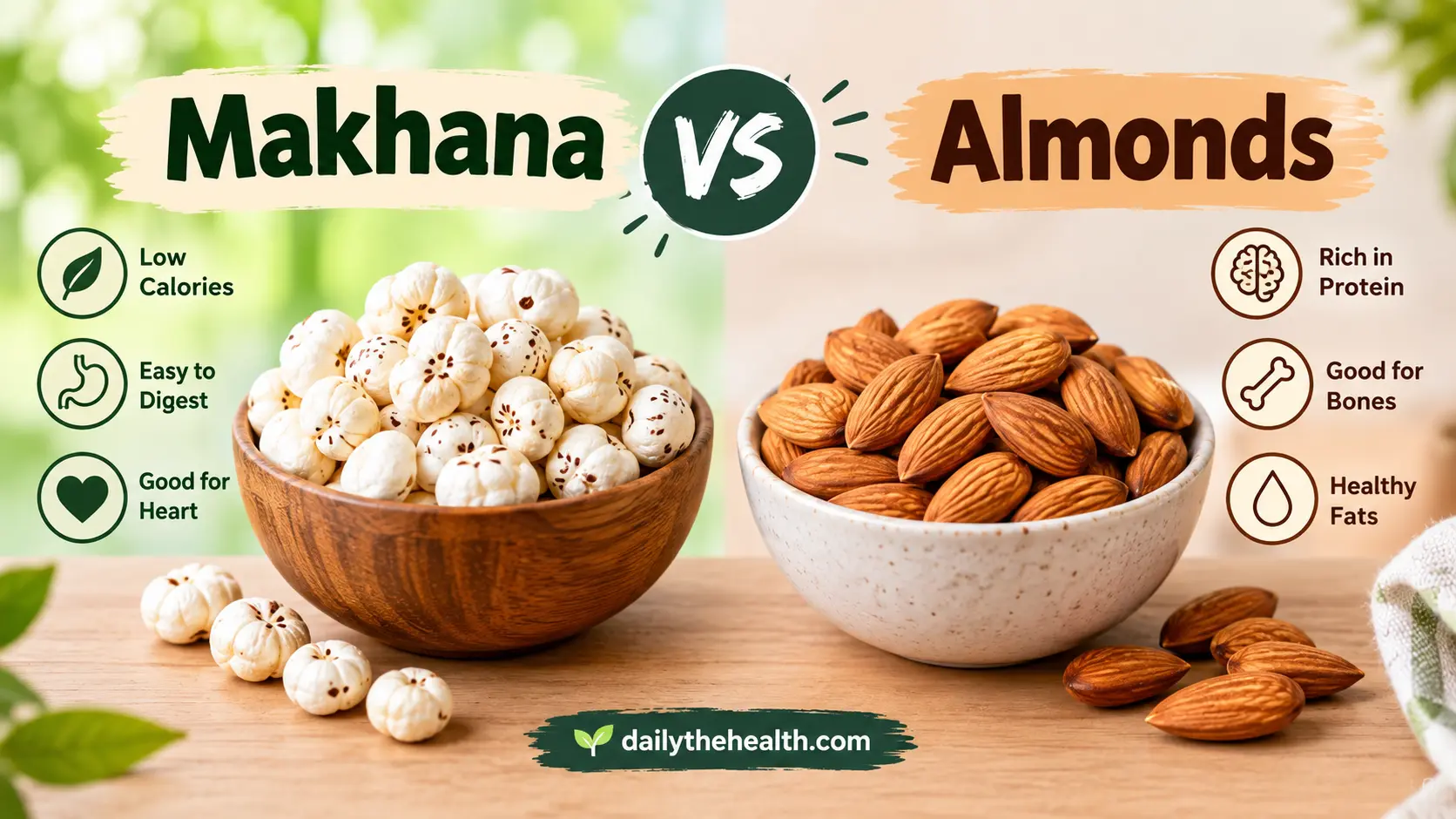
I used to grab a fistful of almonds every afternoon and call it done. Healthy snack, box ticked, move on.
Then a nutritionist friend put a bowl of roasted makhana next to my almonds and made me read both labels out loud. I felt a little silly, honestly I’d been snacking on autopilot for years.
That’s the real question behind makhana vs almonds. It’s not about which one is better in some abstract sense.
It’s about which one matches what you actually need weight control, blood sugar, muscle, or just something to chew on at 5pm that isn’t chips.
Both sit in the same aisle of every Indian kitchen. Both get called superfoods online. They’re not interchangeable, though, and the gap between them is bigger than most articles let on.
Here’s what the numbers actually say, plus where a makhana snack pulls ahead and where almonds still win.
What Is Makhana?
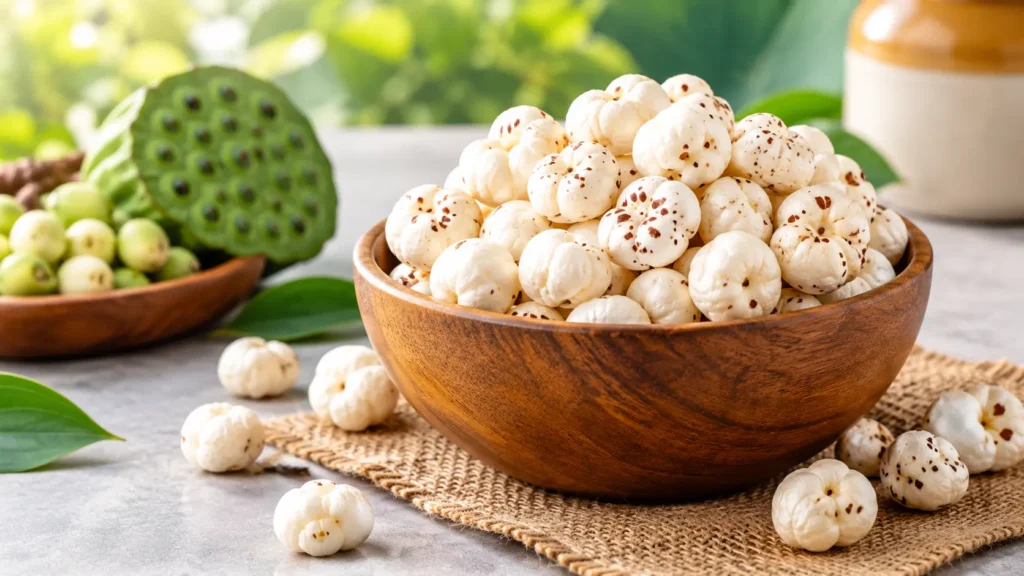
Makhana fox nuts, lotus seeds, whatever your grandmother calls them comes from the Euryale ferox plant, grown mostly in the ponds of Bihar.
Farmers hand-harvest the seeds, dry them, then pop them over heat until they puff up light and crisp. A plain 100-gram serving runs about 350 calories, with 9.7 grams of protein and next to no fat.
You’ll usually find it two ways on shelves: dry-roasted or ghee-roasted. The dry version keeps that near-zero fat count intact. Ghee-roasted tastes better, not going to lie, but it quietly adds a chunk of extra fat and calories per handful.
Almonds work differently. They’re a tree nut, grown mostly in California and parts of the Middle East, and they’re built denser more fat, more calories, more punch per bite.
Makhana vs Almonds: Nutrition Comparison (Per 100g)
I keep coming back to this table whenever someone asks me which is healthier. Numbers below are pulled from USDA and ICMR food composition data.
| Nutrient | Makhana (roasted) | Almonds (raw) |
|---|---|---|
| Calories | ~350 kcal | ~580 kcal |
| Protein | 9.7 g | 21 g |
| Fat | 0.1 g | 50 g |
| Carbs | 77 g | 22 g |
| Fiber | 14.5 g | 12.5 g |
| Calcium | 60 mg | 269 mg |
| Iron | 1.4 mg | 3.7 mg |
| Potassium | 500 mg | 733 mg |
Almonds carry more than double the protein, gram for gram no contest there. Makhana barely registers on fat, while almonds get most of their calories from it (mostly the good, unsaturated kind, so don’t panic about that number).
And makhana’s carb and fiber count is exactly why a small bowl of it fills you up faster than you’d expect. Neither one wins outright. They’re just built for different jobs.
The Antioxidant Angle Nobody Talks About
This part gets skipped in most comparisons, which is a shame. Makhana has kaempferol, a plant compound that fights inflammation and cell damage.
Almonds bring vitamin E to the table and a lot of it. A 100-gram serving covers more than your entire day’s requirement.
So if you eat almonds hoping for better skin or eye health, that vitamin E is doing most of the actual work.
Makhana Benefits for Male Health
I get this question a lot from guys in my circle asked makhana benefits for male: makhana’s low sodium and decent potassium load help with blood pressure control, which starts mattering more past your 30s whether you notice it or not.
There’s also the kidney angle. Ayurveda has leaned on makhana for kidney and urinary health for centuries, and the low-sodium, high-fiber profile at least doesn’t contradict that though I’ll be honest
The modern clinical research backing it up is thin. And post-workout, a makhana snack beats a handful of any oily nut if you’re trying to keep your fat intake in check for the day.

Does Makhana Help With Male Fertility?
You’ll see this claim everywhere better sperm count, more libido, the works. It traces back to Ayurvedic texts, not peer-reviewed trials. I looked for solid clinical evidence and didn’t find much. Treat it as tradition, not medicine.
Makhana Benefits for Female Health
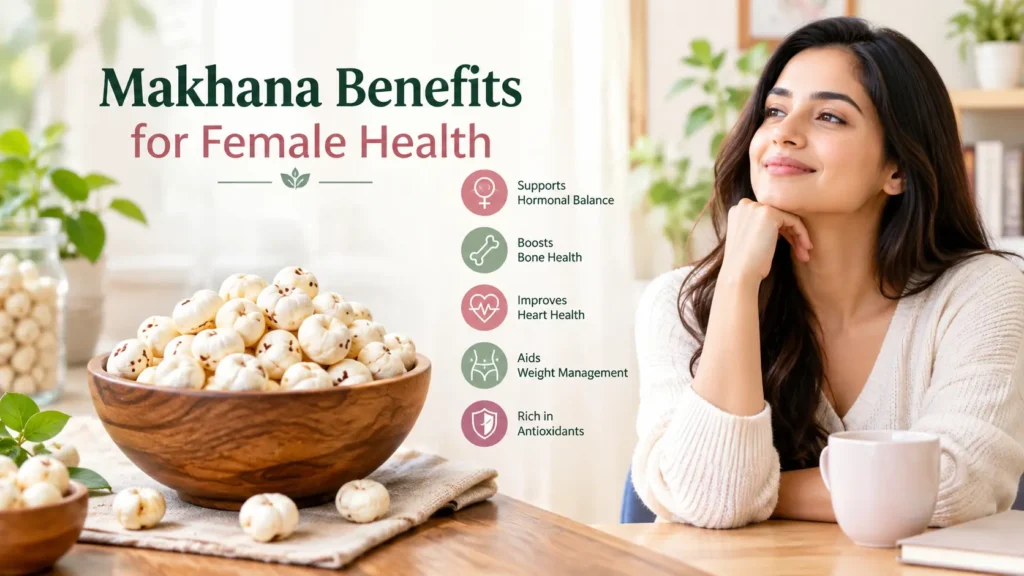
For women, calcium is usually the headline. Makhana benefits for female isn’t in the same league as dairy or almonds here, but it adds up across a week which matters more once you’re past 30 and bone density becomes a real conversation with your doctor.
Pregnancy is where I hear about it most, actually. A lot of doctors in India suggest roasted makhana specifically because it’s light on the stomach and low in fat a rare snack that doesn’t come with a guilt tax.
Some women also lean on it during PCOS management, since the fiber slows sugar absorption and can smooth out blood sugar swings.
That one’s worth running past your doctor before you build a routine around it, though PCOS looks different enough person to person that a blanket recommendation doesn’t really hold up.
Is Makhana Good During Pregnancy?
In normal food-sized amounts, yes. Easy to digest, low in fat, and it nudges your calcium intake up a bit. Just skip the ghee-heavy versions if you’re watching weight gain ghee adds up faster than people expect.
Makhana vs Almonds for Weight Loss
This is the one people actually care about.
Calorie-for-calorie, makhana wins on sheer volume you can eat a genuinely full bowl for what a small handful of almonds costs you.
That matters a lot if your problem is mindless snacking rather than real hunger. Almonds, on the other hand, hold you over longer because of that protein-fat combo. Makhana’s carb-heavy profile just doesn’t have the same staying power.
My honest take, after going back and forth on this myself: if you’re snacking because you’re bored, makhana is the safer bet. If you’re actually hungry between meals, a small portion of almonds will carry you further.
Pro Tip: Dry-roast your makhana in a pan with zero oil on medium-low heat, stirring often, for about 5 minutes until they sound hollow when you tap two together. That hollow knock is how you know they’re done. Skip the ghee and the fat count stays near zero without losing the crunch.
Who Should Be Careful With Makhana or Almonds?
No snack is universally safe, and I’d rather say that upfront than let you find out the hard way.
Both makhana and almonds carry oxalates, so if kidney stones run in your family, or you’ve had one before, ask your doctor about a safe daily amount before making either a habit.
Almonds are also a fairly common allergen obvious, but worth saying, since flavoured almond packs sometimes carry traces of other nuts too.
And whichever one you pick, watch the packaged, flavored versions. Peri-peri makhana and honey-roasted almonds taste great specifically because they’re carrying extra salt, sugar, or oil that plain roasted versions don’t have.
Making a Makhana Snack Part of Your Actual Routine
You don’t need to pick a permanent winner. Here’s roughly how I split it across a week:
- Soak 8 to 10 almonds overnight, eat them first thing in the morning before anything else.
- Dry-roast 20 to 25 grams of makhana for an evening snack — this is my go-to when the 6pm hunger hits.
- Swap sugary namkeen for a makhana-almond trail mix on days I know I’ll be out and about.
- Crush a few almonds into morning oats or a smoothie instead of eating them plain.
- Stir roasted makhana into kheer instead of piling on extra sugar — same comfort, less of the crash after.
- Check your total nut and seed intake weekly rather than obsessing over one day, since one heavier evening won’t undo the rest of the week.
Final Thoughts
Makhana and almonds aren’t really competing with each other they’re doing different jobs.
I keep both in my kitchen now: roasted makhana for the lighter, mindless-snacking moments, and a small stash of almonds for the days I need something to actually hold me over.
Go with whichever matches what your body’s asking for that day, not whatever’s trending this week.
Frequently Asked Questions
Is makhana better than almonds for weight loss?
Makhana gives you fewer calories per handful, so it’s easier to control portions with. Almonds hold your hunger off longer thanks to their protein and fat. Both work for weight loss it comes down to your portions and what triggers your snacking in the first place.
Can diabetics eat makhana and almonds?
Both sit at a low glycemic index, and most dietitians are fine with either in a diabetes-friendly diet in sensible amounts. That said, run any diet change past your own doctor first — blanket advice online isn’t a substitute for that.
Which is cheaper, makhana or almonds?
Makhana generally costs less in Indian markets, though this shifts with season, brand, and grade quality. Worth checking current local rates rather than assuming, since prices on both move around a fair bit.
Can I eat makhana and almonds together?
Sure, plenty of people do mixed with cashews and raisins into a trail mix, it works well. Just watch the total portion, because stacking nuts together adds up in calories faster than people expect.
Is makhana or almonds better for skin?
Different mechanisms, similar goal. Makhana’s kaempferol fights inflammation; almonds’ vitamin E supports repair and moisture. Honestly, using both covers more ground than betting on just one.
How much makhana or almonds should I eat daily?
Roughly 25 to 30 grams of almonds a day a small handful is the usual guideline. For a makhana snack, one small roasted bowl, around 20 to 25 grams, works as a daily portion. Adjust down if you’re watching total calories closely.