
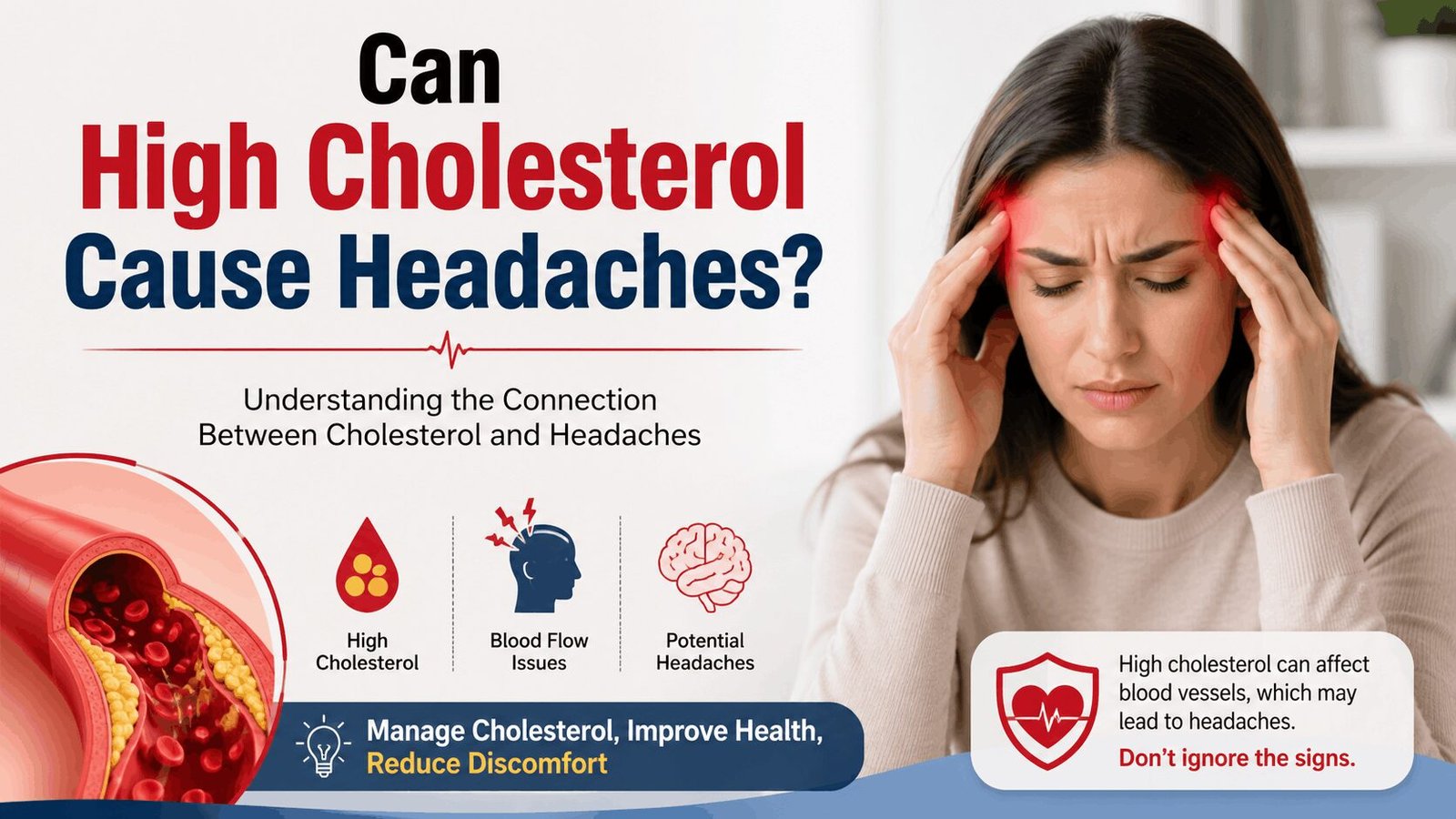
I’ve had this exact worry myself. Woke up with a dull, pressing headache three mornings in a row. Remembered my cholesterol report sitting on my desk total cholesterol 238, LDL through the roof. And the first thing I did was Google can high cholesterol cause headaches.
What I found was disappointing. Most articles gave me a quick no, not directly and moved on. But I had real symptoms and real numbers, and I needed a real explanation. So I dug deeper. Talked to my doctor. Changed some habits. And learned something that most health content completely skips.
That’s what this post is about.
Straight Answer First: Does High Cholesterol Cause Headaches?
No, not directly. That’s the clinical truth.
High cholesterol on its own doesn’t walk up to your skull and cause pain. In fact, doctors call it a silent condition for a reason most people with dangerously high LDL feel absolutely nothing. No symptoms. No warning. Just a number on a blood test that sneaks up on you.
But here’s what nobody explains well enough: high cholesterol can quietly trigger a chain of events in your body that absolutely leads to headaches.
Not tomorrow. Over months and years. And by the time the headaches show up, the underlying problem is already well underway.
That indirect pathway? That’s the whole story.
The Real Ways High Cholesterol Connects to Headaches
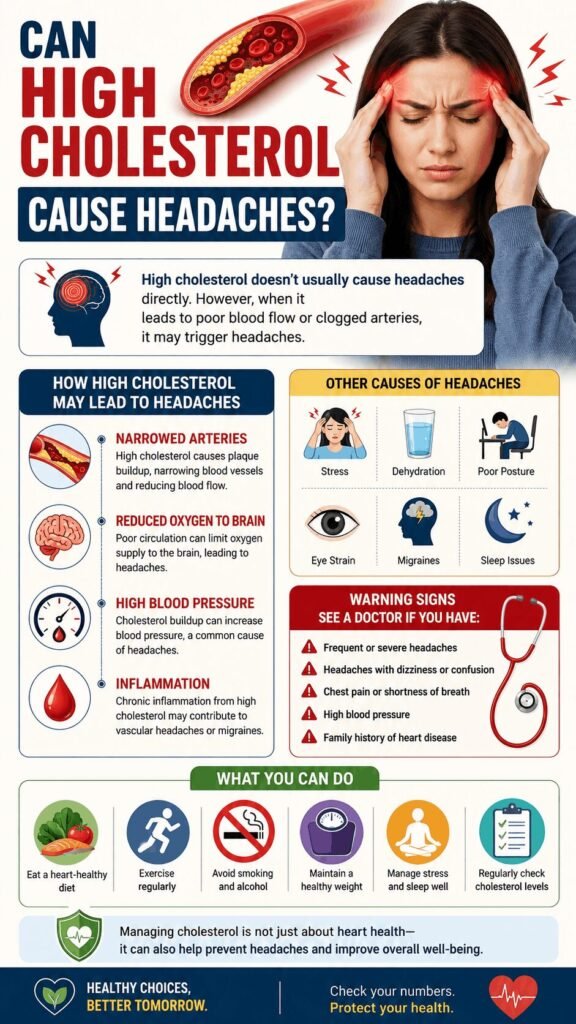
Arteries Get Narrower, Brain Gets Less Blood
When LDL cholesterol stays high for a long time, it starts building up inside your artery walls as a thick, waxy deposit called plaque. This is atherosclerosis and it happens so slowly you genuinely don’t feel it happening.
Over time, your arteries become narrower. Blood flow to the brain drops. And a brain that’s getting slightly less oxygen than it should?
It’s not happy about it. The result is often a dull, persistent headache not sharp, not dramatic. Just there. Usually behind the eyes or at the back of the head.
I describe it as that headache that coffee doesn’t fix and sleep only half-fixes. That was mine, anyway.
High Cholesterol Silently Pushes Up Blood Pressure
This is the connection most people miss completely.
Narrowed, plaque-lined arteries make your heart work harder to push blood through. That effort raises blood pressure.
And high blood pressure hypertension is one of the most proven causes of headaches, especially that tight, pressing feeling around the head you might notice in the morning.
So your headache might not be from cholesterol itself. It might be from the blood pressure problem that cholesterol quietly created. Two steps removed, but directly connected.
Honestly Your Lifestyle Is Probably the Real Culprit
This was the thing that hit me hardest when I talked to my cardiologist.
The habits that drive cholesterol up — eating processed food, sitting too much, sleeping badly, drinking too much — those exact same habits cause headaches.
A diet high in refined sugar? Sugar spikes directly trigger headaches. Chronic dehydration from salty, heavy food? Headaches. Disrupted sleep? Big headache trigger, and also raises your LDL.
It’s the same bad soil growing two different weeds. That’s why people with high cholesterol get more headaches — not because one causes the other, but because they share the same roots.
One Nobody Talks About: Your Statin Might Be Doing It
If you’re already on cholesterol medication statins like atorvastatin or rosuvastatin and you’ve been getting more headaches since starting them, that’s worth noting.
Headaches are a listed side effect for a meaningful portion of patients. It’s not common, but it’s real. If this matches your situation, don’t just push through it.
Mention it at your next appointment — there are alternatives, adjusted doses, or timing changes that can help.
My Own Experience With This
About three years ago I was getting headaches almost every morning. Not the dramatic kind just that low-grade pressure that sits at the back of your head and makes you slightly irritable all day. I figured it was stress. Work was busy. I wasn’t sleeping well.
Then my annual checkup came back with a total cholesterol of 238 mg/dL and an LDL of 159. My doctor wasn’t panicked, but she wasn’t pleased either.
When I asked her if the cholesterol was causing the headaches, she said something I’ve thought about since: It’s probably not causing them. But everything that caused the cholesterol is probably also causing the headaches.
That reframed everything for me. I wasn’t dealing with two separate problems — I was dealing with one lifestyle that was expressing itself in two different ways.
I started walking 35 minutes every day (nothing dramatic). Cut late-night snacking almost entirely. Tried to sleep at the same time every night.
Within about 10–11 weeks the morning headaches were mostly gone. By my next blood test four months later, total cholesterol was down to 204.
Around this time I also started using a BMI Calculator not as some kind of obsessive tracking thing, just to understand where my weight actually stood.
I was at 27.4, which puts me in overweight territory. Using a BMI Calculator by Age gave me useful context where that number sits relative to my age group, and what risk it actually carries.
It was one more piece of the puzzle that helped me understand my body more clearly.
Headache Warning Signs You Should Not Ignore If You Have High Cholesterol
Most headaches even frequent ones aren’t dangerous. But certain patterns, especially if your cholesterol is already elevated, deserve immediate attention.
Go to emergency care or call for help right away if you experience:
- A sudden, explosive headache that hits like a thunderclap — unlike anything you’ve felt before. This is a potential sign of a brain bleed.
- Headache combined with vision going blurry, one side of the face drooping, arm weakness, or speech that sounds off. These are stroke symptoms. Don’t wait.
- Morning headaches that keep recurring alongside a stiff neck and ringing in the ears — this pattern can mean dangerously elevated blood pressure.
- New, frequent headaches that started shortly after beginning a statin or changing your cholesterol medication dose.
These aren’t things to research online at 2am. They need a doctor, same day.
The Uncomfortable Reality About High Cholesterol
Most people with high cholesterol feel perfectly fine. That’s the actual problem.
There’s no burning sensation, no obvious signal, no warning alarm. The plaque just builds quietly. This is why getting a routine lipid panel done matters so much — it’s one of the only ways to catch something serious before it becomes an emergency.
The American Heart Association suggests adults get tested every 4–6 years from age 20 onward. If you have risk factors — family history of heart disease, you smoke, you have diabetes, or your BMI Calculator is telling you you’re in the overweight or obese range — your doctor will likely want to test more often.
What Actually Helps Both Problems at Once
Here’s the practical part. The good news is you don’t need two separate strategies — most changes that lower cholesterol also reduce headaches.
Food changes that genuinely move the needle:
Cut the refined sugar and trans fats first. They raise your LDL and trigger blood sugar spikes that cause head pain. Eat more oily fish salmon, mackerel, sardines a few times a week.
The omega-3s help lower triglycerides and reduce the kind of vascular inflammation that contributes to migraines.
Add magnesium-rich foods: spinach, almonds, pumpkin seeds, dark chocolate. Magnesium deficiency is quietly linked to both high cholesterol and frequent migraines. Most people don’t get enough of it.
And honestly — just drink more water. Sounds basic because it is, but mild dehydration tightens blood vessels and is a very common, very underrated headache trigger.
Movement matters more than most people realize:
You don’t need intense gym sessions. Regular brisk walking — 25 to 30 minutes, most days — raises HDL (the good cholesterol), helps lower LDL, keeps blood pressure in check, and significantly reduces headache frequency. That’s a lot of benefit from a pretty manageable habit.
Sleep is non-negotiable:
Poor or inconsistent sleep raises LDL and makes headaches dramatically more frequent and severe. If you’re getting less than 6 hours most nights, fixing that one thing might do more for your cholesterol and headaches than anything else on this list.
When You Should Get Checked
See a doctor if your headaches are happening more than a few times a week without a clear reason, if your last cholesterol test showed anything above 200 mg/dL total, or if you have more than one cardiovascular risk factor in your history.
Don’t try to connect all the dots yourself. A blood pressure reading, a lipid panel, and a conversation about your symptoms together give a doctor what they actually need to help you.
What I’d Tell Someone in the Same Situation I Was In
High cholesterol probably isn’t the direct cause of your headaches. But if you have both — the numbers and the head pain — they’re almost certainly connected through your habits, your blood pressure, or your medication.
That’s actually good news. Because habits can change.
Check your BMI Calculator by Age to understand where you stand. Get a blood test if it’s been more than two years. Start with one manageable change — walking, sleep, or cutting sugar — and see what shifts over the next few months. Your body is usually more responsive than you expect.
And if anything feels urgent — a sudden severe headache, stroke-like symptoms, anything that feels very different from your normal — don’t sit on it. Go get checked.
Note: This article is for general information only. It’s not a substitute for medical advice, diagnosis, or treatment. Please consult a qualified healthcare professional for your specific situation.
1 thought on “Can High Cholesterol Cause Headaches? Real Causes, Warning Signs & What To Do”