
You’ve done the crunches. You’ve cut the soda. But that soft bulge below your belly button won’t budge.
If this sounds familiar, you’re dealing with a pouch belly. I’ve spent 10 years writing about fitness and body composition, and this is one of the most common frustrations I hear about.
Here’s the truth: a belly pouch is rarely about willpower. It’s about specific, fixable causes. This guide breaks down exactly what causes a pouch belly and how to get rid of it, backed by real research instead of gym myths.
What Is a Pouch Belly?
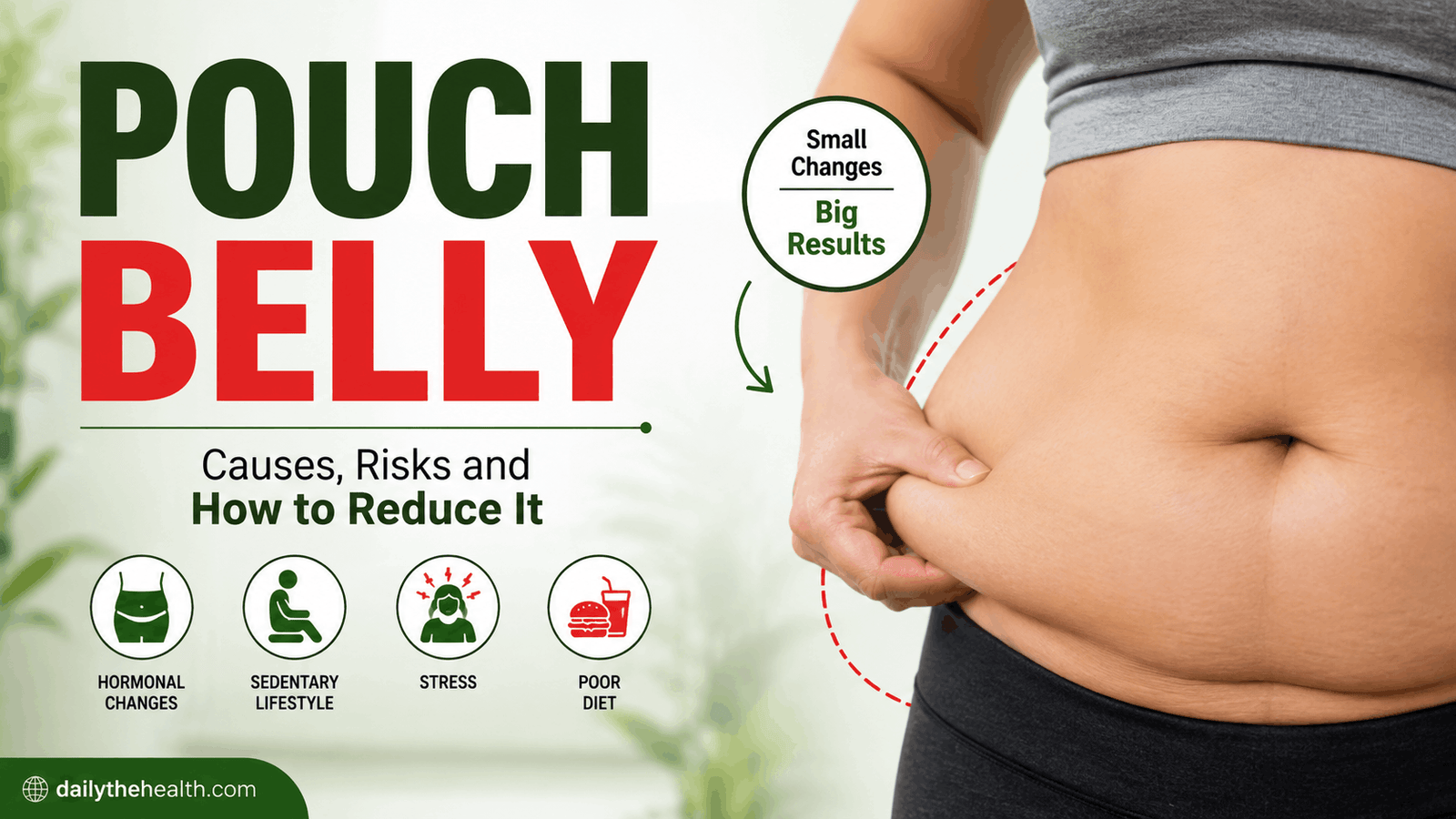
A pouch belly is a soft bulge of fat and skin that sits below your belly button. People also call it a belly pouch or lower belly pooch.
Common causes include stored fat, weak core muscles, a muscle separation called diastasis recti, hormonal shifts, and poor posture. It’s common, and in most cases, it’s treatable.

What Causes a Belly Pouch?
A belly pouch usually comes from one or more of these five things.
1. Stored Fat in the Lower Abdomen
Your body stores fat in specific zones. The lower belly is a common one, especially for men. This fat comes in two types: visceral fat, which sits deep around your organs, and subcutaneous fat, which sits just under your skin.
Genetics decides where you gain fat first and lose it last. That’s why the lower belly often stays soft even after you’ve lost weight elsewhere.
2. Weak Core Muscles
Your core is more than your abs. It includes the transverse abdominis, a deep muscle that wraps around your midsection like a natural corset.
When it’s weak, your stomach has less support and pushes outward. Sitting most of the day weakens this muscle over time. A desk job is an overlooked cause of a pouch belly.
3. Diastasis Recti
This is a gap between the two muscles that form your six-pack. It’s incredibly common after pregnancy. Research shows it affects roughly 60% of women at six weeks postpartum, and about 1 in 3 women still have it a year later.
Cesarean delivery raises the risk further. Men can get it too, usually from fast weight gain or heavy lifting with poor form.
You can check for it at home. Lie on your back with your knees bent. Lift your head slightly and feel above your belly button. A gap wider than two finger-widths may point to diastasis recti.
4. Hormonal Changes
Cortisol, your main stress hormone, tells your body to store fat around the midsection. Chronic stress keeps cortisol elevated.
Menopause lowers estrogen, which shifts fat storage from the hips to the belly. Low testosterone does something similar in men. This is why stress management belongs in any real plan to fix a belly pouch, not just diet and exercise.
5. Poor Posture
Slouching shortens your abdominal muscles and pushes your stomach forward. Try it: stand up straight, then slouch.
Notice how much bigger your belly pouch looks? Posture alone won’t fix the problem, but bad posture makes it look worse than it actually is.
How to Get Rid of a Pouch Belly
If you’ve been searching how to get rid of belly pouch, here’s what actually works, based on research instead of quick-fix promises.
- Fix your food first. No amount of exercise fixes a diet that’s out of balance. Focus on protein, vegetables, and whole foods. Small, steady changes beat crash diets every time.
- Train your whole body. Doing hundreds of crunches a day won’t melt belly fat. Studies consistently show spot reduction doesn’t work. Full-body strength training burns more calories and builds the muscle that shows once fat drops.
- Strengthen your deep core. Planks, dead bugs, and bird dogs work the transverse abdominis better than crunches ever will.
- Walk more. Aerobic activity is what actually reduces visceral fat over time. Aim for the CDC’s recommended 150 minutes of moderate cardio a week.
- Protect your sleep. Poor sleep raises cortisol, and higher cortisol means more belly fat storage. Aim for 7 to 9 hours a night.
- Give it time. Visible change takes weeks, not days. Most people quit right before they’d have seen results.
Pro Tip: Only 23% of U.S. adults meet the CDC’s full activity guidelines each week (150 minutes of cardio, plus 2 days of strength training). If that’s you, start there before spending money on anything else. Two 20-minute strength sessions and three brisk walks a week will do more for your belly pouch than any supplement on the shelf.
How to Get Rid of Lower Belly Pouch
The lower belly pouch behaves a little differently than fat higher up. It’s usually a mix of stored fat and a weak transverse abdominis. That means the fix has two parts: lower your total body fat, and strengthen the deep core muscle that flattens this exact area.
Add these three moves to your week:
- Dead bugs: Lie on your back, arms reaching up, knees bent at 90 degrees. Slowly lower one arm and the opposite leg, then switch sides.
- Reverse crunches: Lie on your back and lift your knees toward your chest using your lower abs, not momentum.
- Standing pelvic tilts: Stand tall, tuck your pelvis slightly under, hold for two seconds, then release.
Do these two to three times a week, alongside regular cardio and a protein-focused diet. Skip anything that promises to melt a pouch on your lower belly overnight. That’s not how bodies work, and anyone claiming otherwise is selling something.
When to See a Doctor
Most belly pouch cases respond to diet, exercise, and time. But check in with a doctor or pelvic floor physical therapist if you notice:
- A visible ridge or bulge along your midline when you tense your abs
- Ongoing lower back pain
- A bulge that gets worse when you cough, laugh, or strain
- No improvement after 3 to 4 months of consistent effort
A pelvic floor physical therapist can assess diastasis recti in a single visit and build you a targeted plan. Don’t push through pain alone.
The Bottom Line
A pouch belly isn’t a flaw. It’s a normal response to fat storage, muscle weakness, hormones, or pregnancy, and it’s fixable.
Start simple: eat real food, train your whole body, strengthen your deep core, sleep enough, and give it time. If you’ve stuck with the basics for a few months and nothing’s changed, or you’re in pain, get checked by a professional.
Your body didn’t do anything wrong. It’s just waiting for the right inputs.
Frequently Asked Question
How long does it take to get rid of a belly pouch?
Most people notice a difference in 8 to 12 weeks with consistent diet and exercise changes. Diastasis recti can take 3 to 6 months to close with targeted core work. Genetics, age, and how long you’ve carried the extra weight all affect your timeline.
Can you get rid of a belly pouch without exercise?
Diet alone can shrink the fat layer, but it won’t fix weak core muscles or diastasis recti. You could lose the fat and still have a soft, unsupported midsection. Pairing nutrition changes with core work gets better, longer-lasting results than diet alone.
Does a belly pouch mean I’m unhealthy?
Not necessarily. Some belly pouch is just normal fat distribution or loose skin, and that’s not a health risk by itself. But waist size is worth watching. Research links a waist over 35 inches in women or 40 inches in men to higher risk for heart disease and type 2 diabetes. That’s a reason to check in with a doctor, not a reason to panic.
What’s the difference between belly fat and diastasis recti?
Belly fat is extra fat you can pinch or measure. Diastasis recti is a structural gap between your ab muscles, common after pregnancy or major weight changes. You can have one, both, or neither. The home test above helps you tell them apart before you choose a fix.
1 thought on “Pouch Belly: What Causes It and How to Get Rid of It”