
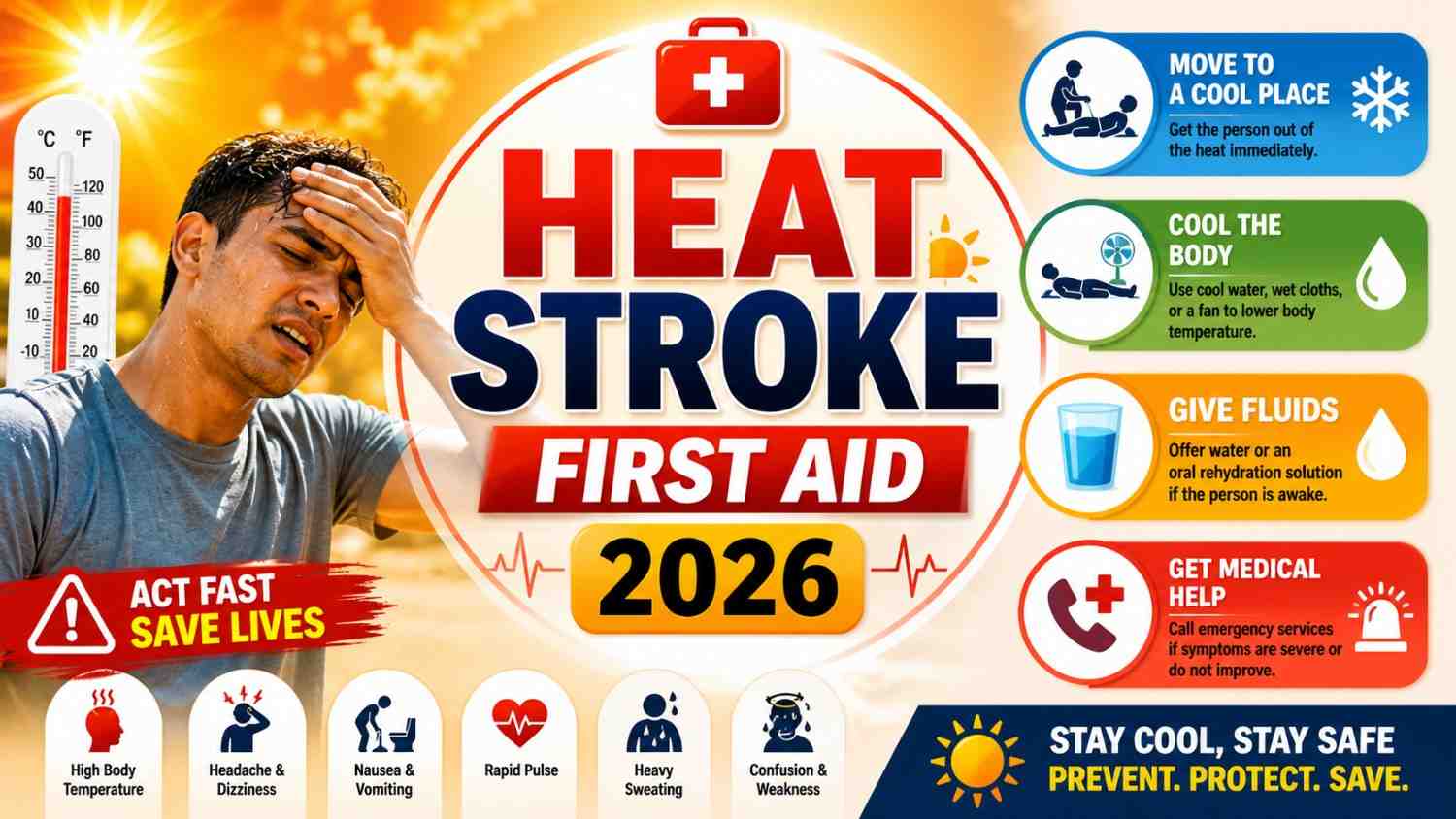
It was a Tuesday in May. Very hot afternoon. The kind where you do not want to step outside at all.
My neighbor, Mr. Sharma, was outside watering his plants. I was sitting near my window. I was half-watching him and half-looking at my phone.
Then he fell. No shouting. No warning. He just went straight down to the ground.
I ran out.
What happened in the next ten minutes I still think about it.
He Was Hot. Dry. And Confused.
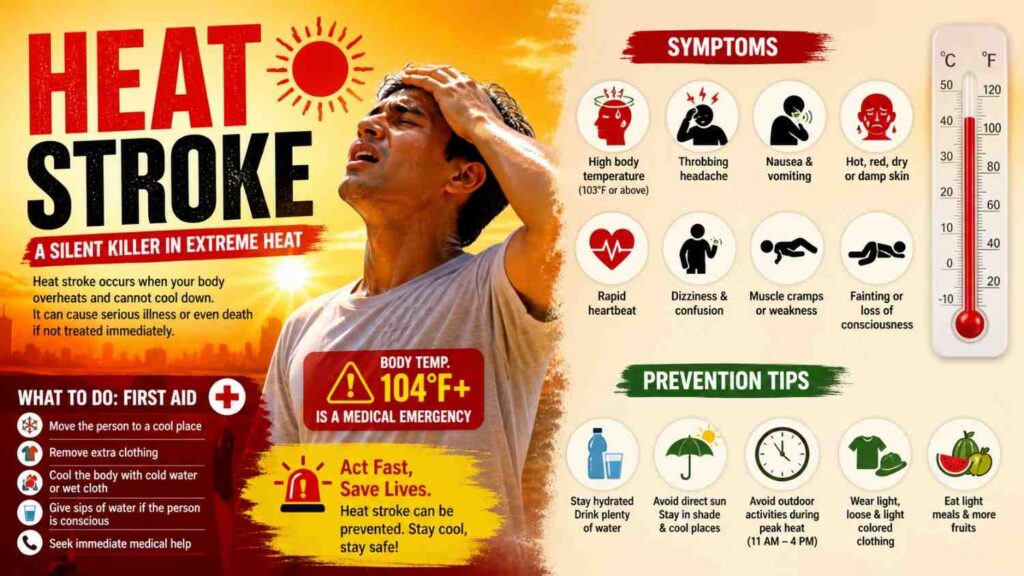
When I got to him, he was awake but not really there. His eyes were open but he kept saying things that made no sense.
I touched his arm. His skin was burning. Not warm like a fever. Actually burning.
And there was no sweat. That surprised me. I expected sweat. There was almost none at all.
His breathing was fast. Short breaths. Quick.
I did not know what heat stroke was at that point. Not really. I just knew something was very wrong.
Later I found out when the body stops sweating in the heat, that is the danger sign. It means the body’s cooling system has already stopped working. That is heat stroke. It is different from heat exhaustion, where the person is still sweating and the body is still trying to fight.
Heat stroke means the body gave up fighting. And that needs help right now.
If you read other blog about Summer Weight Gain Diet Plan
If you read other blog about hydration summer health tips
What I Did Some of It Was Right. Some Was Not.
I want to be honest here. I did not do everything correctly.
The things I got right:
First thing I did I pulled him into the shade. Not far. Just against the wall near his door where the sun was not hitting. That alone matters a lot. Sun keeps cooking the body even after the person is down.
Then I called the ambulance. I did not wait to see if he would get up on his own. I called straight away. That was the right call.
While waiting, I ran inside and grabbed a cloth and cold water. I soaked the cloth and put it on his neck, his wrists, his forehead.
I had heard somewhere that the neck and wrists are where blood runs close to the skin. Cooling those spots cools the blood going through the whole body.
I kept talking to him. Asked him his name. Asked him what day it was. I wanted to see if his answers were getting better or worse.
The things I got wrong:
I gave him water to drink. He was barely awake and I made him sip water. The paramedic told me later do not do this.
If someone is not fully awake, they can choke. Water and fluids for heat stroke go through a drip at the hospital. Not through the mouth unless the person is fully alert.
I also did not take off his shirt. He had a full-sleeve shirt on. Removing extra clothes helps the skin let heat out faster. I just did not think of it at the time.
What the Paramedics Did That I Did Not Know
When they arrived, they checked his temperature first. It was 40.3 degrees Celsius. The paramedic said anything above 40 is a serious emergency.
They took off his outer clothes immediately. Then they put a wet sheet over him and used a small fan on him.
Wet skin plus moving air that brings body temperature down faster than almost anything else you can do outside a hospital.
They did not use ice. I had seen people on the internet say to use ice packs. The paramedic told me that is wrong.
Ice on skin makes the blood vessels near the surface close up. That actually slows cooling inside the body. Cool water and air works much better.
At the hospital they gave him a drip and watched his kidneys and liver. Those organs take the most damage when body temperature goes too high. He stayed three days. He came home fine.
The Things Nobody Tells You
Most first aid guides say cool the person down and call for help. That is correct. But there is more that nobody mentions.
First the person can seem fine and then get worse again. Mr. Sharma was talking normally by the time the ambulance came.
He looked almost okay. His temperature was still dangerously high inside his body. You cannot judge heat stroke by how the person looks after a few minutes of cooling.
Second – the person may resist help. When someone is confused from heat stroke, they sometimes try to get up and walk. Mr. Sharma kept trying to stand. You have to stay calm. Keep them lying down. Do not let them walk around.
Third – recovery takes longer than people think. He was told by the doctor to stay away from heat and hard activity for two full weeks after leaving hospital.
Heat stroke lowers your body’s ability to handle heat for weeks afterwards. Going back out too soon puts you in danger again.
This last part almost no one talks about it. And it is important.
What You Should Actually Do
Here it is simply:
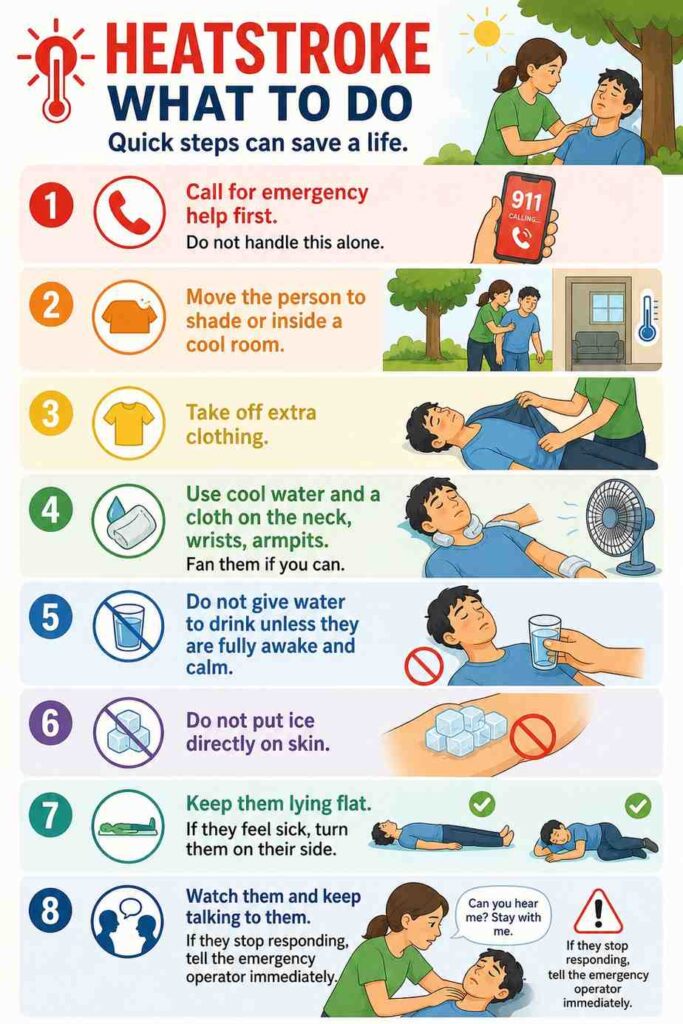
Call for emergency help first. Do not handle this alone.
Move the person to shade or inside a cool room.
Take off extra clothing.
Use cool water and a cloth on the neck, wrists, armpits. Fan them if you can.
Do not give water to drink unless they are fully awake and calm.
Do not put ice directly on skin.
Keep them lying flat. If they feel sick, turn them on their side.
Watch them and keep talking to them. If they stop responding, tell the emergency operator immediately.
I Still Think About Those Ten Minutes
Mr. Sharma is fine. Every morning now he waters his plants but earlier, before the day gets hot.
I think about those ten minutes because I did not do everything right. And I got lucky that it did not matter in the end.
The heat in 2026 is serious. It is hotter than it was ten or fifteen years ago. More people are collapsing outside older people, people who work outside, people who just did not notice how hot it got.
You do not need to be a doctor to help someone in those first minutes. You just need to know a few things before it happens.
I did not know them. Now I do. And now you do too.