
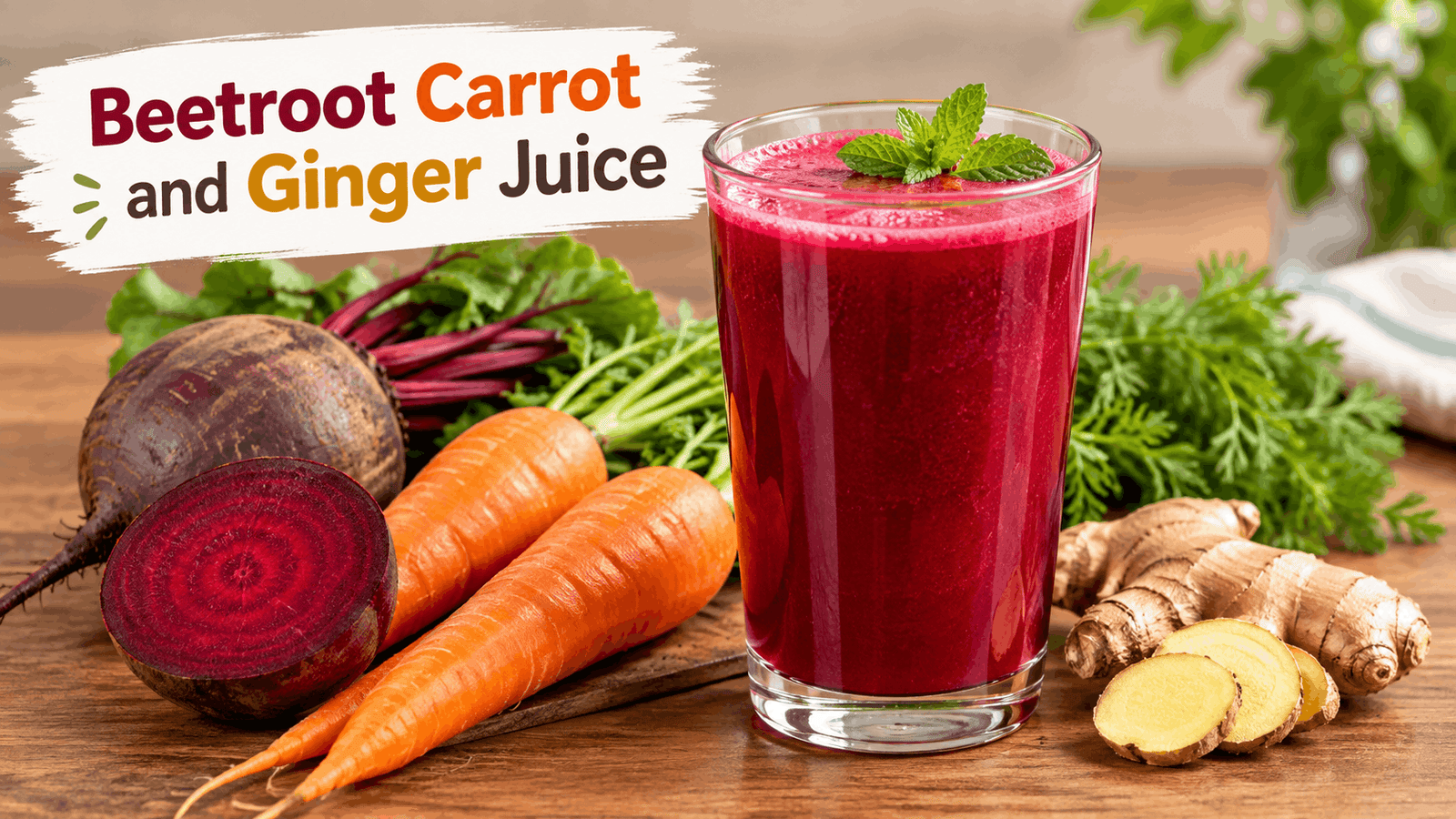
The first batch of beetroot carrot and ginger juice I made tasted like dirt. Actual, literal dirt. I’d used way too much beet and not enough of anything else, and I almost gave up on the whole idea right there at my kitchen counter.
A year later, I make a version of this juice three mornings a week. My doctor wanted me to try diet changes before starting blood pressure medication, and this ended up being the one change that actually stuck.
Beetroot carrot and ginger juice gets a lot of hype online, and some of it is deserved. Some of it isn’t. Here’s what I’ve learned from drinking it regularly, backed by the actual research, including a couple of 2026 studies that add real nuance to the picture.
What Is Beetroot Carrot and Ginger Juice?
Beetroot carrot and ginger juice is a fresh vegetable juice made by blending or pressing raw beets, carrots, and ginger root, usually with water or lemon added.
It combines beetroot’s nitrates, carrot’s beta-carotene, and ginger’s gingerol compounds in one drink. People make it for heart health, energy, digestion, and immune support.
You don’t need fancy equipment. A blender with a strainer works fine, and so does a basic juicer.
Let’s Clear Up the Detox Myth First
A lot of juice blogs claim this drink flushes toxins out of your body. It doesn’t. No juice does. I’m not sure why this myth won’t die, but it won’t, so let’s kill it here.
Your liver and kidneys handle detoxification every single day, whether you drink beet juice or not. There’s no vegetable combination that speeds that up.
What this juice actually does is add specific nutrients to your day: nitrates, vitamin A, and a handful of anti-inflammatory compounds.
That’s genuinely useful. It’s just not a cleanse, and I’d rather tell you that upfront than sell you something it isn’t.
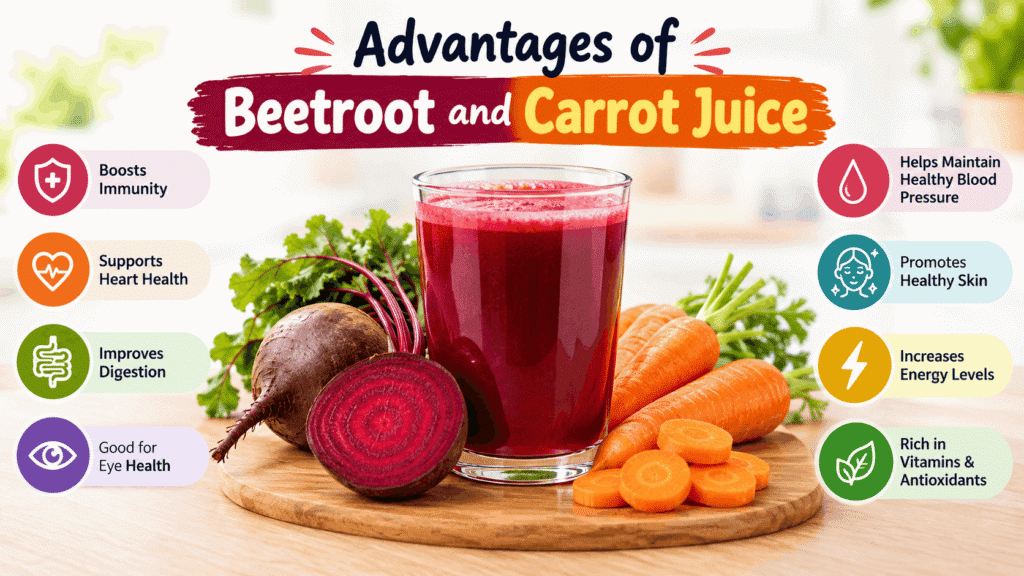
Advantages of Beetroot and Carrot Juice
Here’s what actually holds up when you look at the research and advantages of carrot and beetroot juice
May Support Healthy Blood Pressure
This is the best-researched benefit, by far. Beets are high in natural nitrates, which your body converts into nitric oxide, a compound that relaxes and widens blood vessels.
In a 2019 study from Imperial College London and UCL, beetroot juice with natural nitrate dropped systolic blood pressure (the top number) by about 5 mmHg within 30 minutes, compared to a placebo.
A larger trial pushed this further: 68 adults with high blood pressure drank nitrate-rich beetroot juice daily for four weeks, and their systolic pressure fell by an average of 9 mmHg.
That’s a real number, from a vegetable, not a pill. I still ran it by my doctor before treating it like part of my routine, and you should too.
The 2026 Update: It May Work Better If You’re Older
A University of Exeter study published in Free Radical Biology and Medicine in May 2026 found that beetroot juice’s blood pressure benefit may depend on your age.
Adults in their 60s and 70s who drank concentrated beetroot juice twice a day for two weeks saw real blood pressure drops. Adults under 30 did not, even though the juice changed their mouth bacteria too.
The difference comes down to oral bacteria. In older adults, beetroot juice reduced a bacteria type the researchers linked to inflammation (Prevotella) and increased a type linked to health benefits (Neisseria). Younger mouths didn’t need the same boost.
I’m in my forties, right at the edge of where this research starts to apply. It matches what I felt: the effect built up over weeks, not days.
2026 Research Update: A King’s College London study, published in July, found that chewing sugary gum right after beetroot juice temporarily boosted its blood-pressure-lowering effect, dropping systolic pressure by another 3 mmHg.
Sugar makes saliva more acidic, which speeds up how fast your body converts nitrate into nitrite. The researchers are clear this isn’t a real recommendation, regular sugar is still bad for your teeth, but it’s a neat sign of how much the chemistry in your mouth matters here.
Hits Your Daily Vitamin A Needs Fast
One medium carrot has about 509 micrograms of vitamin A as beta-carotene, over half of what most adults need in a day. Juice it, and that number climbs fast, since you’re getting the concentrated liquid without the fiber slowing things down.
Ginger Actually Works for Nausea
This isn’t folk medicine hand-waving. Gingerol and shogaol, the compounds in ginger, have been tested in real clinical trials, and they reduce nausea. The NHS recommends ginger for this exact reason.
I keep a piece of ginger in my freezer just for mornings when my stomach feels off. Grated frozen ginger works better than you’d expect, and it lasts for months.
Cheaper than the bottled ginger shots at the grocery store checkout, too. Those are basically flavored water with a markup.
Athletes Use It for a Reason
Competitive runners and cyclists drink beetroot juice before races. It’s not a trend, it’s called nitrate loading, and sports science backs it: some studies show endurance gains of 2 to 16 percent in trained athletes, along with a lower oxygen cost during exercise.
You don’t need to be training for a marathon to benefit. But if you work out hard, drink your juice 2 to 3 hours beforehand. I’m not an athlete. I just like knowing the option’s there.
How to Make Beetroot Carrot and Ginger Juice at Home
Five minutes, three vegetables, no special skills required.
Ingredients:
- 1 medium beet, scrubbed and peeled
- 3 medium carrots, scrubbed
- 1-inch piece of fresh ginger, peeled
- 1 cup cold water (skip this if using a juicer)
- Half a lemon, juiced (optional)
Steps:
- Wash and prep. Scrub the beet and carrots well. Peel the beet and ginger, but leave the carrot skin on for extra fiber.
- Chop into chunks. Small pieces are easier on your blender or juicer motor.
- Juice or blend. In a juicer, feed the chunks through and collect the liquid. In a blender, add the cold water, blend until smooth, then strain through a fine mesh strainer or nut milk bag.
- Add the lemon juice. It cuts the earthy beet taste and slows down browning.
- Drink fresh, or store it. It tastes best right away, but keeps in a sealed jar in the fridge for up to 24 hours.
Pro Tip: New to beet juice? Start with a 1:3 ratio of beet to carrot. Straight beet juice tastes like dirt to most first-timers. Carrots and ginger balance it out until your taste buds catch up. I also buy my beets in bulk from the Saturday farmers market, since they run cheaper there than at my regular grocery store, and I wash the whole week’s batch at once.
3 Mistakes I Made So You Don’t Have To
- Too much beet, too soon. My first batch was almost all beet. It tasted like a mouthful of soil. Ease into the ratio.
- Skipping the lemon. Without it, the juice turns a dull brownish color within an hour and tastes flatter. The acid actually slows that down.
- Letting it sit too long. I once left a batch in my bag during a commute. By lunch, it had separated and lost that fresh, bright taste. Drink it within a few hours, or refrigerate it fast.
Juicer or Blender: Which One Should You Use?
I get asked this a lot, so here’s the honest breakdown.
A centrifugal juicer is fast and easy to clean, and most models cost $40 to $80. The trade-off is more oxidation, since the fast spinning blade introduces air, which can break down some nutrients slightly faster.
A cold-press juicer crushes rather than spins, so it keeps more nutrients and makes less noise. It’s also slower and pricier, usually $150 to $300.
A regular blender plus a strainer is the cheapest option if you already own one. You get more fiber in the final drink, which some people prefer, and cleanup takes a bit longer because of the straining step.
I started with a blender. I only bought a juicer after I knew I’d actually keep drinking this stuff, and I’d suggest you do the same. No point spending $200 on a habit you might quit in a week.
Best Time to Drink Beetroot Carrot and Ginger Juice
I drink mine first thing in the morning, on an empty stomach. That lets your body absorb the nitrates and vitamins without competing with a big meal.
If you’re working out, drink it 2 to 3 hours beforehand so your body has time to convert the nitrates into nitric oxide.
Skip it right before bed. Beets are a mild diuretic for some people, and ginger can be a little stimulating in larger amounts.
Is It Safe to Drink Every Day? Side Effects to Know
Drinking this juice daily is safe for most healthy adults, but a few things are worth knowing first.
- Pink urine or stool. Beets contain a pigment called betalain. In one clinical trial, more than 6 in 10 people drinking nitrate-rich beetroot juice noticed pink or red coloring in their urine or stool. It’s harmless and clears up once you stop.
- Oxalates. A cup of beet juice has roughly 160 mg of oxalate. Not nothing. If you’ve had calcium oxalate kidney stones before, talk to your doctor first, or pair the juice with a calcium-rich food.
- Blood pressure drops. Since this juice can lower blood pressure, be careful if you’re already on blood pressure medication, have naturally low blood pressure, or take medications like Viagra or Cialis. Check with your doctor before combining them.
- Ginger and blood thinners. Ginger may have a mild blood-thinning effect. Talk to your doctor if you’re on blood thinner medication.
- Natural sugar. Juicing strips out the fiber that normally slows sugar absorption. If you have diabetes or watch your blood sugar, treat this juice as a small side, not a big glass, and pair it with some protein or fat.
My Experience After One Month
I’m not a doctor, so take this as one person’s experience, not medical advice.
I drank about 8 ounces of this juice, four mornings a week, for a month. My at-home blood pressure readings went from an average of 134/86 to 126/80. I also stopped reaching for a second coffee around 10 a.m., which genuinely surprised me.
What didn’t change: my weight. This juice isn’t a shortcut for weight loss. It’s a nutrient boost, not a meal replacement, and I don’t think anyone should market it that way.
The biggest hassle was cleanup. Beet juice stains everything red if you don’t rinse it fast, and I ruined one of my favorite dish towels finding that out. (My partner still brings this up, months later.)
I juice over the sink now. My partner still won’t touch the stuff. She says it smells like a garden after rain, and not in a good way. I don’t disagree, but I drink it anyway.
The Bottom Line
Beetroot carrot and ginger juice isn’t a miracle, and it’s not a detox either. But the blood pressure and nausea research is real, the 2026 studies add genuinely new nuance, and the recipe still takes five minutes. It’s an easy way to add more nitrates, vitamin A, and anti-inflammatory compounds to your day.
Start with the 1:3 beet-to-carrot ratio, keep the lemon in, and give it two weeks before deciding if it’s worth keeping around. Then decide for yourself. That’s really all I can tell you.
Is beetroot carrot and ginger juice good for weight loss?
Not directly. It’s low in calories and has no added sugar, so it beats soda as a swap. But juicing removes fiber, so it won’t fill you up the way eating the whole vegetables would.
Can I drink this juice on an empty stomach?
Yes, and most people prefer it that way. If ginger irritates your stomach, pair it with a small breakfast instead.
How long does homemade beetroot carrot ginger juice last?
About 24 hours in a sealed container in the fridge. After that, it starts losing nutrients and can begin to ferment.
Can I freeze it?
Yes, though the texture changes slightly after thawing. Pour it into ice cube trays, then blend the frozen cubes into a smoothie instead of drinking it straight.
Can kids drink beetroot carrot and ginger juice?
In small amounts, yes. Use less ginger, since it’s strong for a child’s palate, and check with your pediatrician if your child has any health conditions.