
I never thought I’d be the one lying on the bathroom floor at 2 a.m., shaking with a 103°F fever. I’ve covered health stories for over 15 years.
I knew the flu. Or so I thought. This January changed everything. The 2026 flu season is not like anything we’ve seen in 25 years. Nearly 19 million People have already been hit. Over 10,000 have died.
Doctors across the country are sounding the alarm — not just because of the numbers, but because this year’s symptoms are showing up differently.
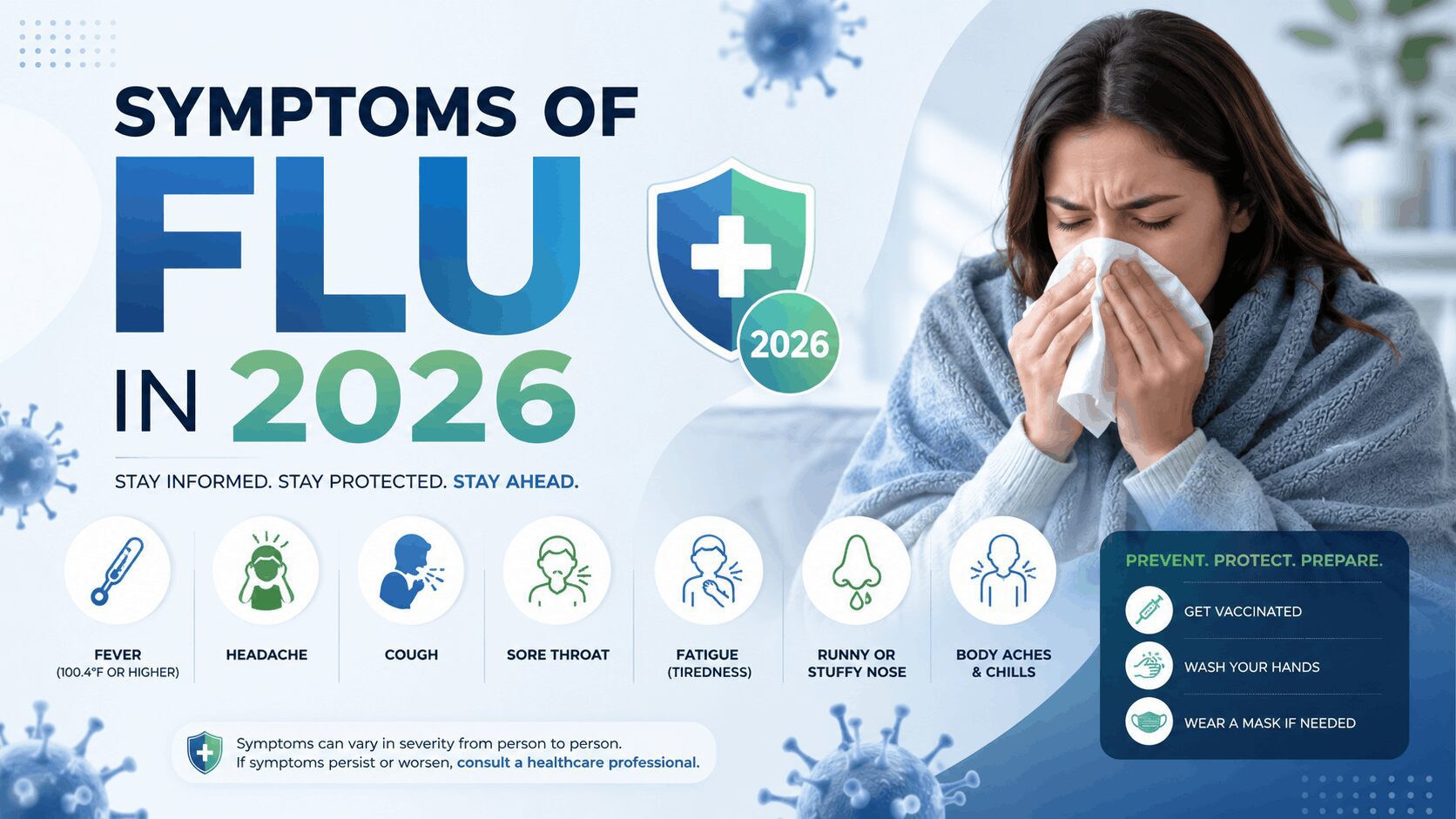
And most people are missing the early signs completely. Here are the 8 symptoms you absolutely cannot afford to ignore.
First Things This Season Is Different
I want to be upfront. What’s going around this year isn’t your average flu. Two strains have been making life miserable for people across the country Influenza A, specifically a version called H3N2 subclade K the one the media tagged super flu, and Influenza B, which picked up steam from around mid-April onward.
The super flu label sounds dramatic. But talking to other people who got hit this season, I kept hearing the same thing — this one came on faster, hit harder, and stuck around longer than anything they remembered. That matched my own experience.
Numbers-wise, by late January, close to 19 million Americans had already been infected. Over 10,000 deaths. 44 children. I write about health statistics for a living and those numbers still stopped me cold.
What the Symptoms Actually Feel Like — From Someone Who Lived Through It
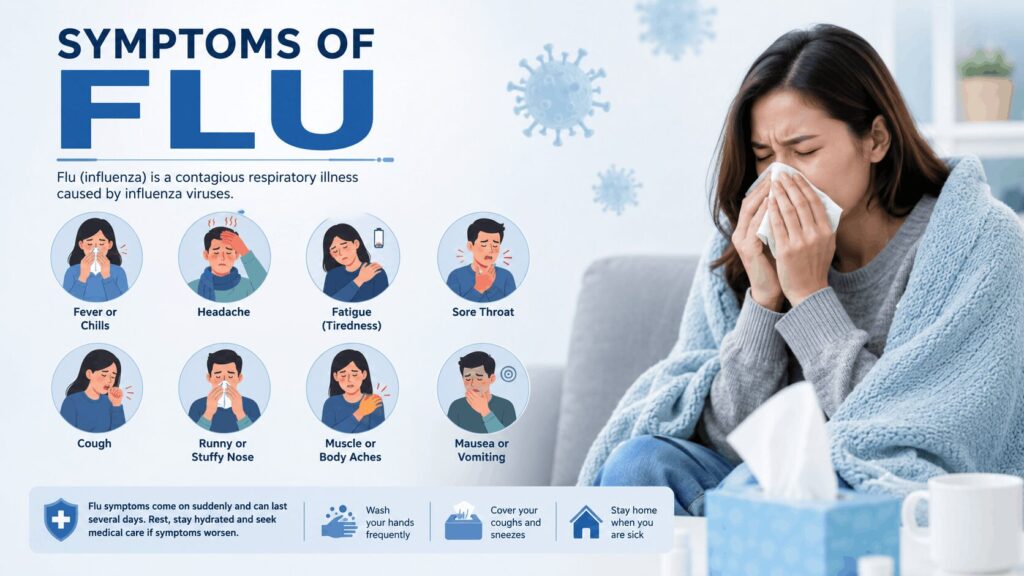
Here’s the part most articles get wrong. They give you a tidy bullet list. Fever. Cough. Fatigue. Done. But this season, the way symptoms showed up caught a lot of people — myself included — completely off guard.
It Started in My Stomach, Not My Lungs
Tuesday afternoon, before any fever or cough, I felt queasy. Nauseous, a little crampy, the kind of feeling where you keep wondering if lunch disagreed with you. I genuinely thought it was food-related. It wasn’t.
Doctors have been reporting this all season. The flu in 2026 often leads with gut symptoms — nausea, stomach discomfort, sometimes diarrhea — before the classic chest and fever stuff kicks in. That delay in recognizing it as flu means a lot of people waited too long to act. I was one of them.
The Fatigue Wasn’t Like Being Tired. It Was Something Else.
By Wednesday I was exhausted in a way I don’t have great words for. I slept almost 11 hours and woke up feeling worse. My arms felt heavy lifting a glass of water. I kept sitting down in random places — the kitchen floor, the bathroom edge — because standing took effort.
This is what separates flu fatigue from regular tiredness. Sleep doesn’t fix it. Rest doesn’t fix it. Your body is fighting something and it’s using everything it has. That’s what it feels like.
The Fever Was Relentless
Thursday. 103.4°F. I’ve had fevers before — this was something else. The chills came in waves. I’d drenched the sheets with sweat, my husband would help me change, and fifteen minutes later I’d be shaking again. That cycle — fever spiking, sweating, chills returning — went on for almost two full days.
H3N2 infections are known for this pattern specifically. If your temperature crosses 103°F and it keeps cycling back no matter what you take, that’s your body telling you something serious is happening.
Body Aches That Made Everything Hurt
My back ached lying still. My knees hurt bending. Even my jaw was sore — I don’t know how that happens but it did. People who’ve only had colds sometimes think they’ve had the flu. This is how you know the difference. The flu makes your entire physical structure feel wrong.
Then Came the Cough
Around day three the cough showed up — dry, deep, came from somewhere in my chest. A few people I know from this season described mild shortness of breath too, which is when the lower respiratory tract starts getting involved. That’s the point where I personally stopped trying to manage things at home and called my doctor.
Smaller Symptoms That Added Up
Splitting headache that sat behind my eyes for four straight days. Sore throat that felt raw and swollen. Nose stuffed and then suddenly running. No appetite at all — the smell of food cooking genuinely made things worse.
Individually these seem minor. Together, with everything else, they add up fast.
When I Knew I Needed to Call the Doctor
Day three. Fever still hadn’t broken. My chest felt tight when I took a deep breath. I called.
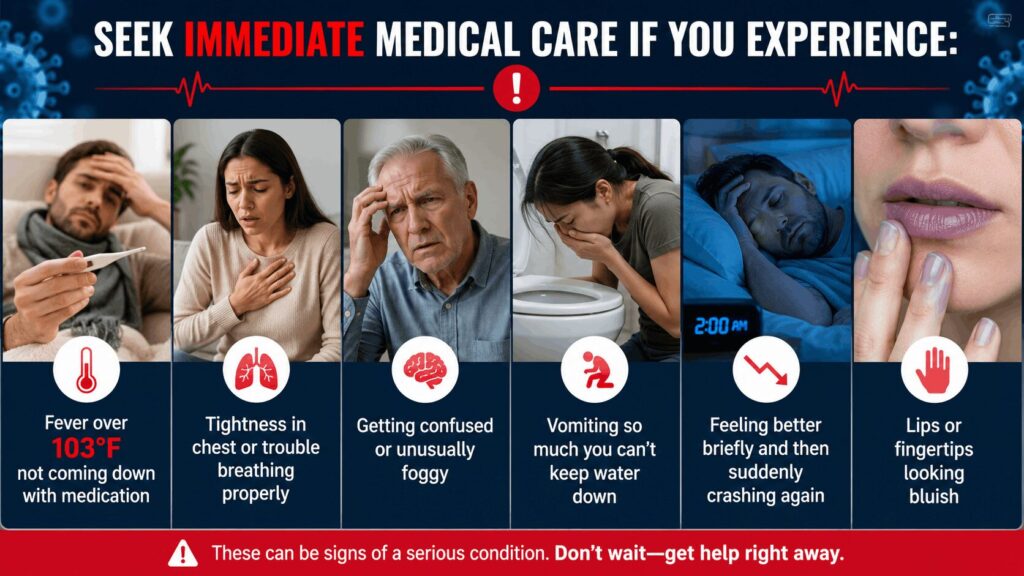
I want to say this clearly — don’t wait as long as I did. Seek care quickly if you notice:
- Fever over 103°F not coming down with medication
- Tightness in chest or trouble breathing properly
- Getting confused or unusually foggy
- Vomiting so much you can’t keep water down
- Feeling better briefly and then suddenly crashing again
- Lips or fingertips looking bluish
If you’re older, pregnant, immunocompromised, or dealing with a chronic condition — don’t wait for things to get dramatic. Call earlier.
Recovery Time — Be Realistic With Yourself
The worst of it — the peak fever, the worst aches — ran about five to six days for me. My fever broke on day four. I thought I was turning a corner.
I still felt genuinely awful for almost two weeks after that.
Cough lingered. Energy was maybe 60% for days 8 through 12. I tried to go back to normal on day 9 and felt like I’d relapsed. I hadn’t — I just pushed too fast.
You’re contagious for five to seven days from when symptoms start, sometimes longer if your immune system is compromised. The actual practical rule: stay home until you’ve had a full 24 hours without fever — and not because you took something for it.
Did the Flu Shot Even Help?
I was vaccinated. My husband wasn’t. He got significantly sicker, stayed sick longer, and ended up needing a second course of treatment. That comparison alone told me something.
That said — this year’s H3N2 subclade K strain wasn’t a great match for the vaccine. Doctors have been honest about that. The vaccine didn’t fully block the infection for me. But it very likely took the edge off what could have been much worse. Adult vaccination rates sit around 40% in the U.S. right now. That’s too low. It shows.
What Actually Helped Me Get Through It
Not medical advice. Just what worked for me, personally.
Sleep — real, phone-off, world-off sleep. Not rest while checking messages. Actual shutdown.
Water constantly. Electrolyte drinks when I could stomach them. Warm broth for the days when solid food wasn’t happening.
Antiviral medication — my doctor got me started within 48 hours of symptoms starting. That timing window matters a lot. The fever started responding within a day of beginning the course.
A humidifier running in my room. The difference it made for the cough and sore throat was immediate and real.
And time. Boring, frustrating, necessary time. The body clears this on its own schedule and pushing it genuinely makes things worse.
What I’d Tell Anyone Feeling Off Right Now
This season’s strains hit differently. They arrive in a weird order — stomach stuff first, then fever, then chest symptoms. The fatigue is something you have to feel to understand. And the fever can get serious fast.
If something feels off — heavier than a cold, stranger than usual, wearing you down in a way that seems disproportionate — trust that instinct. Get tested early. Contact your doctor within the first 48 hours if you can. That antiviral window is real and it closes quickly.
I wish someone had told me that before January. Maybe this piece does that for someone else.
Take care of yourself. Rest properly. And go get vaccinated before next season starts.