
I’ve covered diet and fitness trends for ten years, and most fall apart once you check the research behind them.
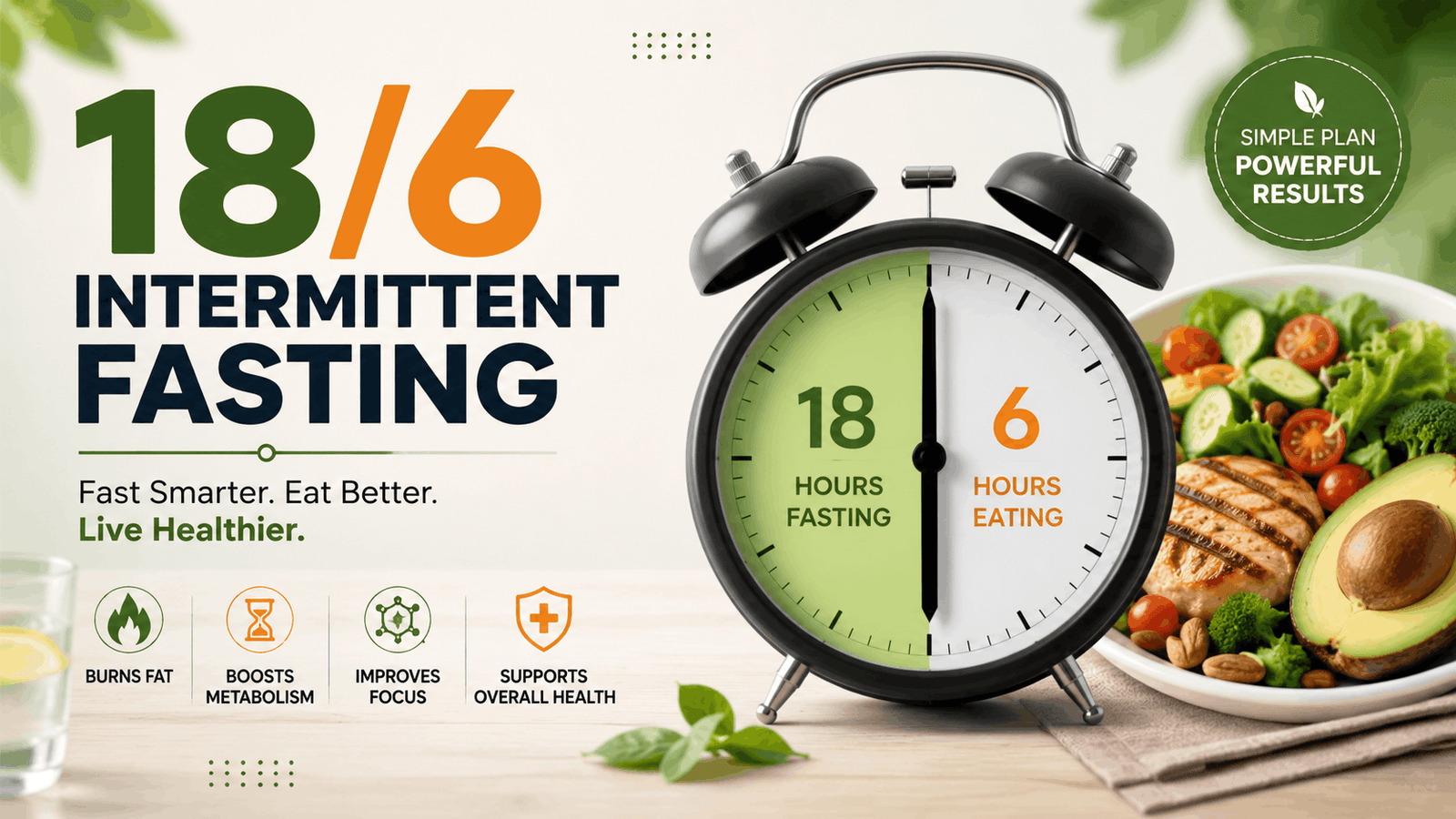
18/6 intermittent fasting is one of the few that doesn’t. You fast for 18 hours, eat during a 6-hour window that’s the entire plan. No app, no food list, nothing to log.
I ran it myself for six weeks before writing this. Week one was rough. I sat through an 11 am meeting white-knuckling black coffee while a coworker ate a bagel two feet away.
By week three, I’d stopped noticing. That miserable first week, boring by week three pattern is close to universal it’s what I hear from almost everyone who sticks with it.
Below are the real 18/6 intermittent fasting benefits, backed by trial data, not the vague claims you’ll find on most fitness blogs.
If you read other blog about BMI Calculator
What Is 18/6 Intermittent Fasting?
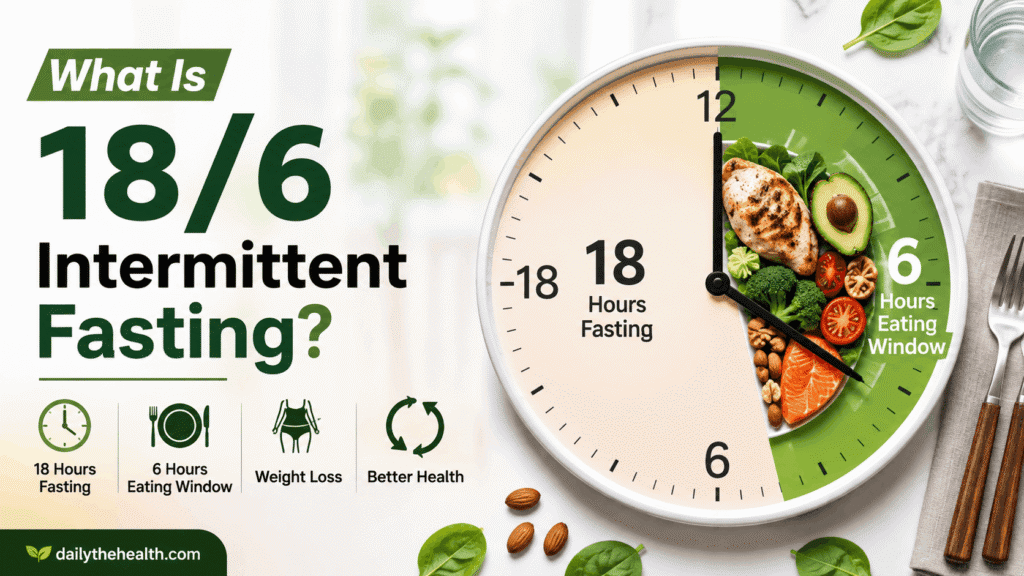
18/6 intermittent fasting means fasting for 18 hours a day and eating all your meals inside a 6-hour window.
Most people skip breakfast, eat their first meal around noon or 1 pm, and stop eating by 6 or 7 pm. It’s one of the more common time-restricted eating schedules used for weight loss and metabolic health.
Here’s where most beginners mess up the math: they count from when they wake up, not from their last bite the night before.
If you finish dinner at 8 pm, hour 18 lands at 2 pm the next day, not noon. Set your reminder off your last bite, not your alarm clock.
Is 18/6 Fasting Better Than 16/8?
Not dramatically, and I wouldn’t start here. Begin with 16/8 for two or three weeks, then stretch to 18/6 once that stops feeling hard push breakfast back an hour, or eat dinner earlier.
The 18-hour window probably tips you into fat-burning mode a little sooner, since that shift tends to start around 12 to 14 hours in, but nobody’s run a large head-to-head trial comparing the two. Whichever one you’ll repeat for a month beats the better one you quit on day four.
18/6 Intermittent Fasting Benefits
Strip out the hype, and here’s what the studies support:
- Better insulin sensitivity. A 2018 study in Cell Metabolism put 8 prediabetic men on an eating schedule that matched 18/6 fasting for 5 weeks. Their insulin sensitivity, blood pressure, and appetite control all improved — without any weight loss.
- Fewer 9 pm kitchen trips. Cutting food off at 6 or 7 pm kills the exact window where most people graze without thinking: second helpings, dessert, the rest of the bag of chips during a show.
- Fewer decisions. You’re planning two meals a day, not six. That removes more daily friction than people expect.
- Possible blood sugar improvements. If a doctor has flagged your fasting glucose or A1C as creeping up, this is the benefit most likely to move that number.
None of that makes 18/6 fasting special. It works because it makes calorie control easier, not because skipping breakfast has hidden powers.
Does 18/6 Fasting Improve Energy and Focus?
Around day 3 or 4, most people hit a rough patch usually when glycogen stores run low and the body hasn’t fully shifted to burning fat yet.
Push through that stretch and focus tends to sharpen by day 10 to 14. That’s steadier blood sugar doing the work, not some fasting-induced clarity.
18/6 Intermittent Fasting for Weight Loss: What the Data Shows
A 2023 meta-analysis pooled eight randomized trials, 579 people total. Combining time-restricted eating with calorie counting led to about 1.4 kg (3 pounds) more weight loss than calorie counting alone.
A separate 12-week study of adults trying time-restricted eating found an average loss of 2.6 kg (5.7 pounds).
About a quarter of participants lost 5% or more of their body weight. People who stuck to the schedule at least five days a week lost more than double what less consistent participants lost.
A 2024 review in Cell Metabolism found that most trials show a 3% to 5% drop in body weight over one to three months, compared to non-fasting control groups.
Put that in real terms: at 180 pounds, a 3% to 5% drop is 5 to 9 pounds over one to two months. Not a transformation photo — steady, unglamorous progress, which is also the kind more likely to stick.
Pro Tip: A reader once told me she was doing 18/6 fasting” and still gaining weight. Turned out her 6-hour window had become two dinners’ worth of food, because she showed up to it starving by hour 16. If you spend all day thinking about your next meal, you’ll overshoot it. Eat normal meals, not a buffet.
The real driver isn’t magic, it’s math. 18/6 intermittent fasting for weight loss works mainly because it shrinks your eating time. Fewer hours to eat usually means less food, even when nobody’s counting calories.
Intermittent Fasting for Metabolic Health
Let’s talk about fasting and metabolism, because this is where the evidence gets more interesting than the scale. Remember those prediabetic men from the 2018 study?
Their insulin sensitivity and blood pressure improved without losing a single pound fasting itself, not just eating less, changed how their bodies handled sugar.
Here’s the mechanism: after roughly 12 to 14 hours without food, your body switches from burning glucose to burning stored fat.
Researchers call this the metabolic switch. An 18-hour fast buys you 4 to 6 hours in that fat-burning state every day, more than a 16/8 schedule gives you.
Fasting may also trigger autophagy, your cells cleaning house and recycling damaged parts. Most of that evidence is still in mice, not people, so I’d hold off repeating fasting triggers autophagy like it’s settled science. It’s promising. It isn’t proven.
How to Start 18/6 Intermittent Fasting
- Start with a 12-hour fast for a few days. Stop eating after dinner, don’t eat again for 12 hours. Most people already do this without noticing.
- Stretch to 14, then 16 hours. Add an hour every three or four days instead of all at once. Push breakfast later rather than skipping meals cold turkey.
- Lock in a 6-hour window that fits your real schedule, not an ideal one. Noon to 6 pm suits a normal office job. Train early? 10 am to 4 pm might work better.
- Build real meals, not snacks. Two solid meals beat six grazing sessions — a protein, a starch, and vegetables, not a granola bar and coffee.
- Add a pinch of salt to your water during the fast. This fixes the afternoon headache new fasters almost always get.
- Track energy and sleep, not just the scale. The scale lags. You’ll usually feel a difference in week two, before you see one in week four.
Who Should Avoid 18/6 Intermittent Fasting
18/6 fasting isn’t universal advice, whatever your feed tells you. Skip it, or loop in a doctor first, if any of these describe you:
- You’re pregnant or breastfeeding
- You have a current or past eating disorder
- You have type 1 diabetes, or you’re on insulin
- You’re under 18
- You take medication that needs to be taken with food
- You’re underweight, or you have a history of restrictive eating
I’ve had readers with type 1 diabetes ask about lowering their insulin dose to make fasting work. Don’t wing that one insulin timing during a fast is a conversation for your endocrinologist, not a blog post.
The Bottom Line
18/6 intermittent fasting isn’t a hack, and it won’t out-perform a bad diet. It’s a scheduling tool that happens to make calorie control and blood sugar easier for a lot of people, backed by modest, real numbers instead of miracle ones.
Start with 16/8, get bored of it, then stretch to 18/6. Eat real meals in your window. Salt your water. Give it more than four days before deciding whether it’s working. Most people quit right before it gets easy.
Common Questions About 18/6 Intermittent Fasting
Can I drink coffee during the fasting window?
Yes, and most people who stick with this lean on it hard. Black coffee and plain tea don’t add meaningful calories and won’t break your fast. Add cream, sugar, or a splash of oat milk, and you’ve technically started eating.
How long until I see results?
Less bloating and steadier energy usually show up in one to two weeks. Visible weight loss takes longer, four to six weeks based on the trial data above, not the “flat stomach by Friday” promises you’ll see on social media.
Is 18 hours of fasting safe for healthy adults?
For most healthy adults, yes. None of the trials cited here found serious safety issues in healthy participants over weeks to months. Nobody has tracked this much past a year, so treat it as something you revisit occasionally, not a rule carved in stone.
1 thought on “18/6 Intermittent Fasting: What Actually Happens When You Try It”