
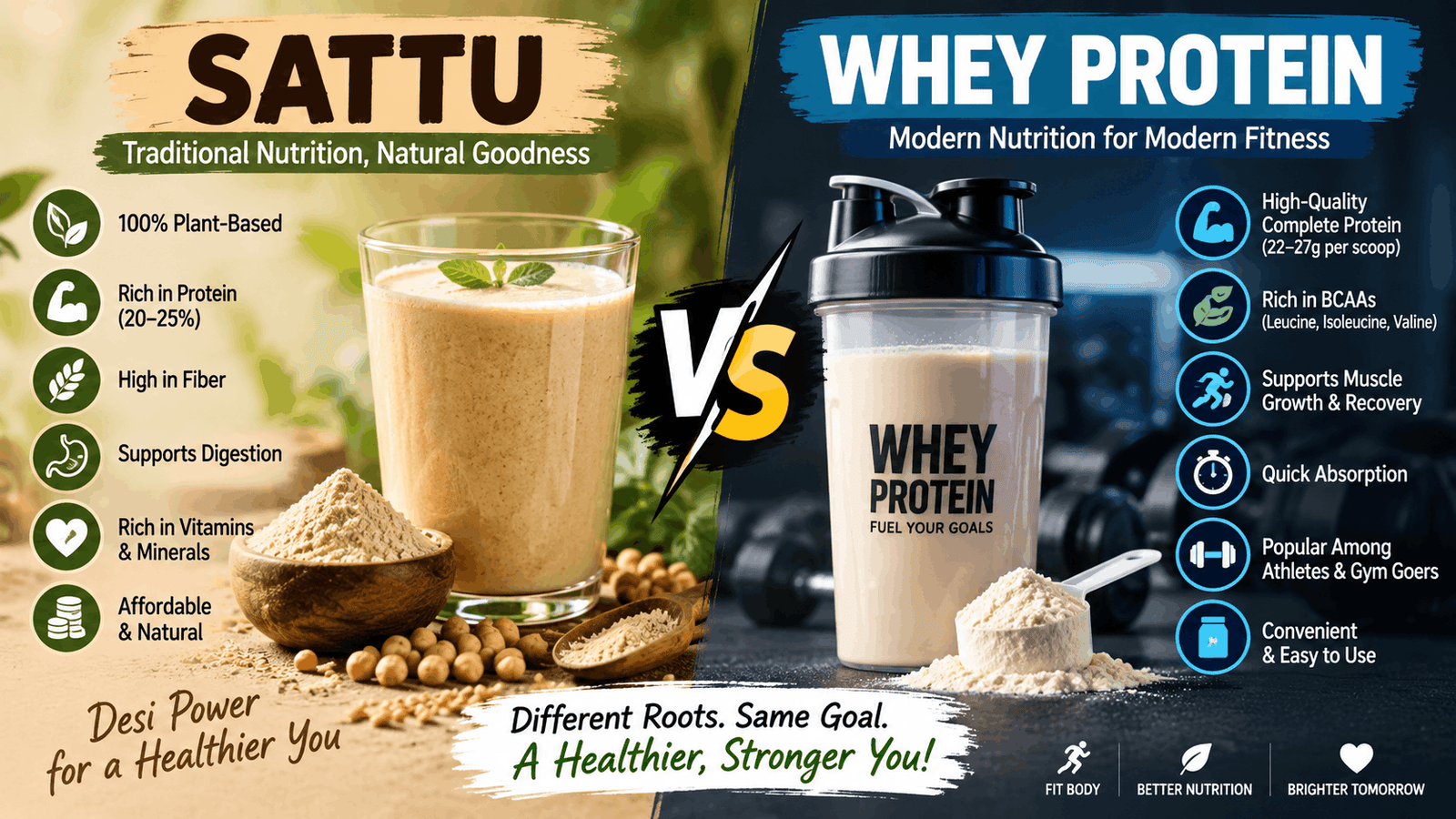
Every week, someone asks me the same thing: sattu vs whey protein, which one should I actually buy? I’ve been writing about Indian nutrition for years now, and I’ve gone through phases of using both, sometimes together, sometimes not.
Short answer? Sattu is the cheap, filling, everyday option. Whey is the fast, targeted one you reach for after a workout.
Which one wins for you depends on your goal, your wallet, and honestly, how your stomach handles each one.
My nani used to make sattu sharbat every summer when the heat got unbearable, way before anyone in my family had heard of a protein shake.
This comparison isn’t really new. It’s old food versus new marketing, and the old food holds up better than you’d think.
Let’s get into the actual numbers.
Sattu vs Whey Protein
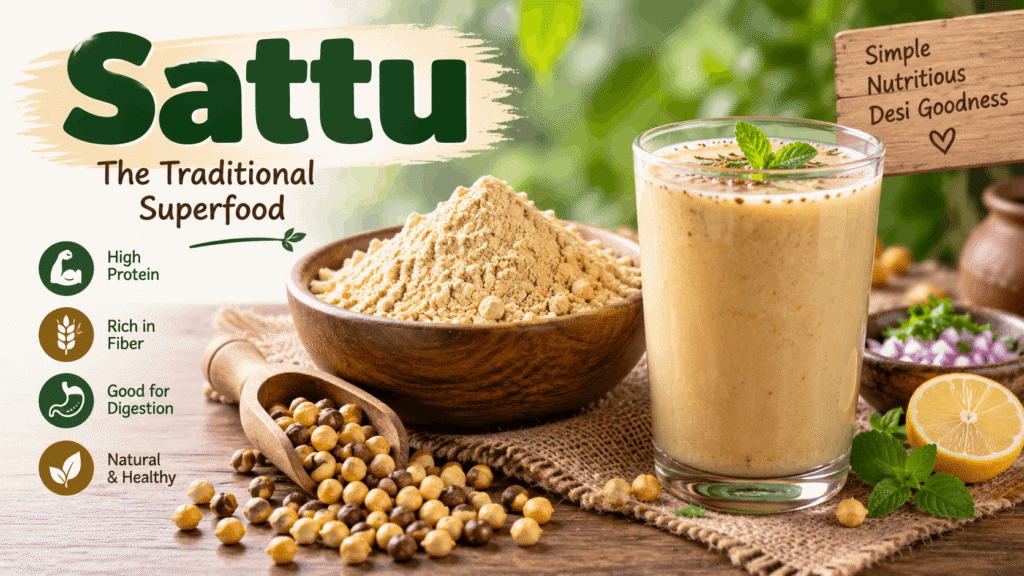
Sattu is roasted gram flour, packing 20-22 grams of protein per 100 grams, along with fiber, iron, and slow-burning carbs.
Whey protein is made from milk, and gives you 24-26 grams of protein per scoop with barely any fiber. Sattu is far cheaper. Whey absorbs quicker and works better right after training.
Sattu vs Whey Protein: Full Nutrition Comparison
I’m not going to just tell you sattu is healthy and leave it there. Look at a 30-gram serving of each, side by side:
| Nutrient (per 30g) | Sattu | Whey Protein |
| Protein | 6-7g | 24-26g |
| Calories | ~120 kcal | ~110-120 kcal |
| Fiber | ~2g | 0-1g |
| Carbs | ~18g | 2-4g |
| Fat | ~1-2g | 1-2g |
| Digestion speed | Slow | Fast |
How Much Protein Does Sattu Actually Have?
100 grams of chana sattu gives you 20 to 22 grams of protein, based on India’s official food composition data. That’s close to besan, and almost double plain wheat flour.
One catch: sattu isn’t a complete protein on its own. It’s a little short on an amino acid called methionine. Eat it with roti or rice and that gap basically disappears.
Is Whey Protein Really Faster Than Sattu?
By a mile. Whey digests in 20 to 30 minutes flat. Sattu takes its time because of all that fiber and the complex carbs sitting alongside the protein.
That’s not really a flaw. It depends what you need. Right after a workout, fast wins. Mid-morning at your desk, slow and steady keeps you from raiding the snack drawer at 11am.
Sattu vs Whey Protein for Weight Gain
Here’s where sattu quietly wins, and almost nobody talks about it. Sattu isn’t just protein. It comes bundled with carbs and a little fat too, all in the same scoop.
That combo is exactly why it counts as one of the best high-calorie breakfast foods for weight gain, especially for people who can’t stomach a big meal first thing in the morning.
Whey on its own doesn’t really help here. Mixed with plain water, a scoop gives you 110-120 calories, tops. You’d have to bulk it up with banana, milk, or peanut butter for it to matter.
High-Calorie Breakfast Foods for Weight Gain: My Go-To Sattu Shake
This is the shake I tell people to try first on High-Calorie Breakfast Foods for Weight Gain :
- Mix 4 tablespoons (about 40g) of sattu into 250ml of full-fat milk.
- Add one ripe banana and a teaspoon of ghee.
- Blend in a tablespoon of jaggery, or two chopped dates if you’d rather.
- Blend it smooth and drink it fresh, right after you get up.
One glass gets you close to 550-600 calories and 15-18 grams of protein. Most people trying to gain weight need roughly 300-500 extra calories a day. This single shake covers most of that on its own.
Pro Tip: Throw in a spoon of roasted peanut powder or til (sesame) powder. It quietly adds 3-4 grams of protein and some healthy fat, and you won’t even taste it.
Which One Builds Muscle Faster?
For raw muscle-building speed, whey takes it. It hits your blood fast and carries all nine essential amino acids at once, leucine included, which is the one that actually kicks off muscle growth after training. Sattu has leucine too, just a lot less of it.
That doesn’t mean skip sattu. Drink it an hour before an early workout and you get steady energy without the sugar crash whey sometimes gives you on an empty stomach.
Save the whey for right after you finish training, when speed actually matters.
If you want my honest take: sattu carries your everyday protein, whey shows up for that 30-minute post-workout window. You don’t have to pick a side forever.
Price Comparison: Sattu vs Whey Protein in India
Rough numbers, based on what’s actually selling right now:
- Sattu: ₹150-300 per kg, or ₹4-7 for a 30g serving.
- Whey concentrate: ₹1,800-3,500 per kg for most Indian brands.
- Whey isolate or imported brands: ₹3,000-6,000+ per kg.
- Whey, per serving: usually ₹60-120.
Most comparisons stop at price per kilo, which honestly isn’t fair, since whey is way more protein-dense than sattu.
Do the math per gram of actual protein instead: sattu comes out to roughly ₹1 a gram, whey closer to ₹3 a gram. Sattu still wins, just not by the wild 10x cheaper claim you’ll see thrown around online.
Whey’s also gotten more expensive lately, and it’s not just you imagining it. India imports most of its whey protein from the US and Europe, and a supply crunch has pushed average prices up by around a third over the last two years.
Part of the reason is honestly a bit odd: more people worldwide are on weight-loss injections now, and doctors tell them to eat more protein to hold onto muscle while the weight comes off fast. That’s driving up global whey demand, and Indian buyers are feeling it too.
In plain monthly terms: two sattu servings a day costs you roughly ₹270-540 a month. One whey scoop a day runs ₹1,600-3,150 a month at concentrate prices. Over a year, that gap is real money.
So, Which One Should You Actually Pick?
If you want something cheap you can drink daily without thinking twice, go with sattu. It’s filling, it’s got fiber, and it won’t wreck your monthly budget.
If muscle building is the actual goal and you’re training hard four-plus times a week, whey earns its price. The speed matters more than people give it credit for.
And if you can swing it, do both. Sattu in the morning, whey right after you train. That’s what I tell most people who ask me this.
Frequently Asked Questions
Can I mix sattu and whey protein together?
Sure, plenty of people do. Just keep an eye on total calories if weight loss is the goal, since combining both adds up fast.
Is sattu good for weight loss?
It can be. The fiber and slow digestion keep you full longer, which naturally means you eat less later in the day without really trying.
How much sattu should I drink in a day?
Most nutrition guides land on 30-50 grams a day, so roughly one or two glasses. Go much higher and the calories start adding up.
Does sattu have any side effects?
Not really, for most people. A few feel bloated if they go overboard too fast. Start small, one glass, and see how you feel before making it a daily habit.
Is sattu or whey better for vegetarians and vegans?
Sattu, no contest. It’s completely plant-based. Whey comes from milk, so it’s a hard no if you’re avoiding dairy.
At the end of the day, sattu and whey aren’t competing for the same job. One’s your daily driver, the other’s your specialist tool. Most people I talk to end up using both, and that’s probably the smartest way to do it.